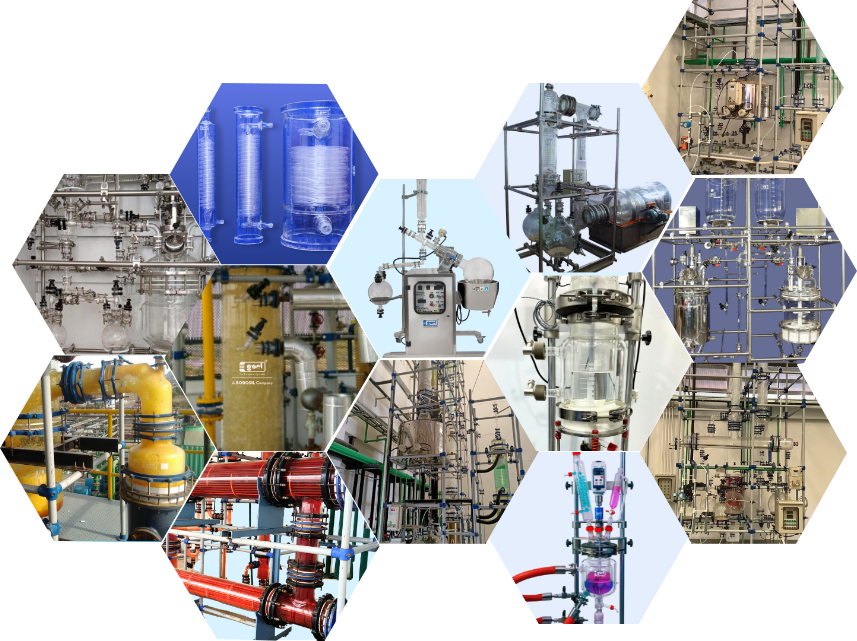








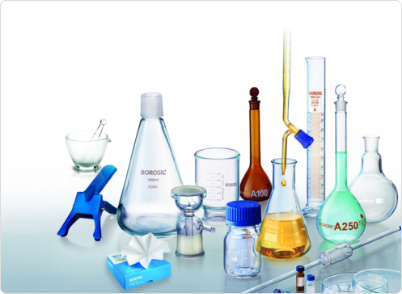
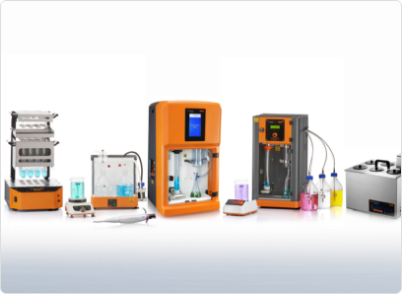
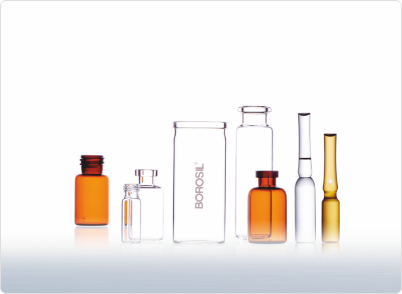


Consistency is important for labs, pharmaceutical plants, and research institutes. When there is little room for error, the quality of lab glassware can have a direct impact on the repeatability of results and their compliance with regulations. That’s why we, at Borosil Scientific, have invested in a deeply integrated and precision-led manufacturing process for over six decades.
Unlike off-the-shelf alternatives, Borosil Scientific glassware isn’t just formed, it’s engineered. Each volumetric flask, beaker, or condenser undergoes strict quality protocols that begin with sourcing raw materials and extend to calibration, annealing, and visual inspections. The difference is visible under a microscope, in wall thickness uniformity, graduation sharpness, and hydrolytic stability.
At the heart of Borosil Scientific’s product line is its high-grade 3.3 expansion borosilicate glass, complying with ISO 3585. This material is chosen because it has superior thermal resistance, low alkali content, and long-term chemical durability. The glass batch is melted at over 1600 °C in platinum-lined furnaces to minimise contamination and ensure batch uniformity.
| Property | Borosilicate Glass 3.3 |
| Coefficient of Expansion | 3.3 × 10^-6 /K (20–300 °C) |
| Hydrolytic Resistance | Class 1 (per ISO 719/USP Type 1) |
| Working Temperature | Up to 500 °C continuous use |
| Annealing Point | Approx. 560 °C |
Only after rigorous batch testing do these raw materials proceed to the forming stage.
Borosil Scientific uses both automated and semi-automated forming lines, depending on the complexity of the product. Products like the Borosil Scientific Class A Volumetric Flasks are produced on high-speed IS machines to maintain dimensional accuracy within ±0.1% of nominal volume.
Annealing is another critical step. All glassware is annealed in tunnel kilns with controlled cooling to relieve internal stresses. Products not annealed properly often crack under thermal load. Borosil Scientific’s annealing lines are continuously monitored and mapped to make sure that every batch falls within the ideal stress threshold as per ISO 4792.
Accuracy in volumetric glassware is non-negotiable. Borosil Scientific offers both Class A and Class B calibration tolerances. Each Class A item is individually calibrated and comes with a batch Certificate of Calibration traceable to NABL-accredited labs.
Graduation markings are printed using ceramic inks and fused onto the glass at temperatures over 600 °C. This makes them chemically resistant and long-lasting. Products like the Borosil Scientific Measuring Cylinders maintain volume tolerances as specified in ISO 4788, and their markings do not fade even after 1000 autoclave cycles.
Once production is complete, every batch of Borosil Scientific lab glassware undergoes strict post-manufacturing validation to maintain conformity with performance specifications. This step is especially critical for volumetric instruments, such as Class A volumetric flasks, burettes, and pipettes, where even slight deviations can introduce systematic errors in analytical processes.
Validation is performed using gravimetric methods in ISO-accredited calibration laboratories. It is checked for tolerance bands, thermal expansion response (at 20°C or 27°C), and surface uniformity in each lot. Borosil Scientific provides batch-specific traceability codes to facilitate the maintenance of records in GMP, GLP, or FDA-audited locations.
A detailed Certificate of Calibration is issued per lot (not per unit), particularly for products such as HPLC vials that comply with ISO 15378 packaging standards. This certificate includes ID numbers, glass type, lot details, and results of QC checks performed during production.
Why it matters:
For regulated labs, post-manufacturing validation is a requirement. Borosil Scientific’s rigorous process design ensures consistent quality from batch to batch, which is why our reputation continues to be upheld.
Several product lines stand out due to their robust specs and adoption across regulated sectors:
All the above products comply with relevant ISO standards, such as ISO 1042, ISO 3819, and ISO 835, and are autoclavable at 121 °C.
For users in cleanrooms and GMP environments, Borosil Scientific makes sure that glassware is washed in deionised water, packed in lint-free packaging, and labelled with batch traceability. Custom gamma sterilisation or ETO sterilisation options are available for OEM clients.
The cleanroom-compliant packaging eliminates particulate contamination during transport, particularly for critical ware like serum vials or media bottles.
Comparison with Generic Glassware
| Parameter | Borosil Scientific Class A | Generic Glassware |
| Calibration | ISO + NABL Certified | Approximate Markings |
| Chemical Resistance | Class 1, ISO 719 | Variable |
| Autoclavability | 1000+ Cycles | <200 Cycles (avg) |
| Printing | Ceramic Ink (Fired) | Screen-Printed |
| QA Protocol | 100% Piece-by-Piece | Random Sampling |
Apart from precision, one key factor is service consistency. Whether it’s a public-sector pharma facility or a CRO handling regulated bioequivalence studies, users know what to expect with every Borosil Scientific shipment. Uniform lot specifications, local distributor support, and easy replacement protocols reduce downtime in regulated environments.
In contrast to single-use plasticware, high-grade borosilicate glassware is reusable for years without compromise. Borosil Scientific glassware is designed for:
The company also promotes take-back programmes for broken glassware via select distributors.
Manufacturing excellence at Borosil Scientific is a product of documented protocols, automated precision, and rigorous compliance checks that make our glassware the preferred choice in thousands of labs across India and beyond.
Whether you’re calibrating solutions in volumetric flasks, measuring pH buffers in beakers, or storing culture media in graduated cylinders, Borosil Scientific makes sure your results aren’t compromised by the vessel that holds them.
At Borosil Scientific, we are committed to advancing laboratory performance through precision glassware that meets global standards, batch after batch. For those who rely on repeatability, traceability, and regulatory-grade performance, the difference starts with the glass.