












The moisture content analysis is crucial in industries where precision, stability, and compliance are essential. From pharmaceutical powders and excipients to food ingredients, construction materials, and chemicals, moisture levels are significant factors in determining the quality, performance, and shelf life of the product. Variations in moisture content, even the most minor amounts, can lead to product failure, microbial contamination or compromised structural integrity.
Precise determination of moisture is a basic necessity in quality control, regulatory affairs, and process standardisation. The choice of the correct moisture content test method is critical to ensure accuracy, efficiency, and reproducibility in determining moisture content.
Precision moisture analysis requires reliable testing methods and high-performance instruments, a key focus for laboratories optimising quality control and regulatory compliance. This guide covers everything from what moisture content testing is and why it matters to the different measurement techniques, as well as the challenges and best practices in moisture determination.
Moisture content refers to the amount of water present in a material, expressed as a percentage of the total weight. It is calculated using the formula:
Moisture Content (%)= (Initial Weight−Final Weight)/Initial Weight×100
Even slight variations can influence mechanical properties, chemical stability, and microbial resistance.
| Industry | Why Moisture Testing Matters |
| Food & Beverages | Controls texture, taste, and microbial growth in processed foods. |
| Pharmaceuticals | Ensures tablet stability, prevents degradation, and meets USP/BP standards. |
| Agriculture | Assesses crop storage conditions, fertiliser stability, and soil moisture levels. |
| Cement | Effective moisture control at each production stage helps ensure high-quality cement output and smooth process flow. |
| Construction & Materials | Determines the strength and curing properties of concrete, aggregates, and coatings. |
The choice of moisture determination method depends on sample composition, accuracy requirements, and industry standards.
| Method | Principle | Best For | Advantages |
| Loss on Drying (LOD) | Heat-driven evaporation of water | Food, feed, Powders, pharmaceuticals | Simple, widely accepted |
| Karl Fischer Titration (KF) | Chemical reaction with iodine reagent | Liquids, oils, trace moisture | Highly accurate for low-moisture samples |
| Infrared /Halogen Moisture Balance | IR radiation removes water, measured via weight loss | Food, Feed, agricultural products | Faster than oven drying |
| Gravimetric Oven Drying | Heating at controlled temperature, weight difference recorded | Food, feed, Pharma, Soil, construction materials | Standardised method for bulk materials |
| Microwave Drying | Microwave radiation evaporates moisture | Rapid testing in food and grains | Faster than conventional drying |
Each method has specific applications, ensuring accuracy and compliance in moisture-sensitive environments.
Selecting the right moisture analyser depends on sample type, precision requirements, and workflow efficiency.
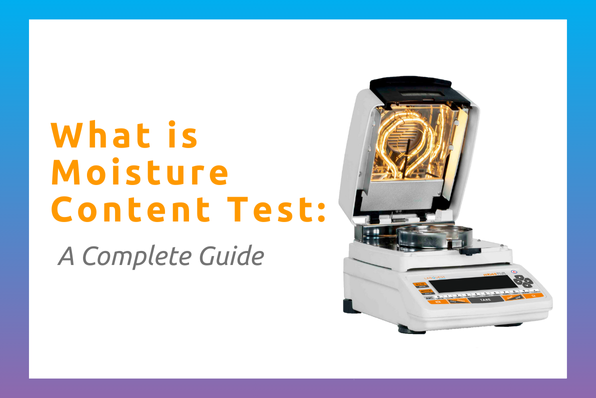
A moisture analyser simplifies moisture testing by automating heating, weighing, and calculation. Selecting the right instrument depends on accuracy requirements, sample type, and testing frequency.
| Instrument Type | Best For | Precision | Common Applications |
| Halogen Moisture Analyser | Fast drying of Food, Feed, powders and pharmaceuticals | ±0.01% | Quality control in food, feed and pharmaceuticals |
| Karl Fischer Titrator | Trace moisture analysis in oils and chemicals | 10 ppm | Solvent analysis, lubricants |
| Infrared Moisture Balance | General industrial applications | ±0.1% | Food, feed, Construction, and agricultural testing |
| Standard Laboratory Oven | Bulk material drying | ±0.5% | Soil, concrete, raw materials |
For high-throughput labs, integrating programmable digital moisture analysers ensures consistency and efficiency in routine testing.
Once you obtain moisture test readings, they must be evaluated for accuracy and consistency.
| Industry | Typical Moisture Range |
| Food Ingredients | 2% – 15% |
| Pharmaceutical Powders | 1% – 5% |
| Grain & Cereals | 10% – 14% |
| Soil & Construction Materials | 5% – 35% |
A higher-than-expected moisture content can lead to:
Conversely, too little moisture can cause:
Precise measurement ensures product consistency, regulatory compliance, and process optimisation.
Despite the use of advanced instruments, moisture testing presents several challenges that can impact accuracy and repeatability.
Advanced moisture analysers with automated calibration and real-time monitoring significantly reduce errors.
To ensure consistent and reliable moisture content measurement, follow these best practices:
For high-precision industries, combining automated moisture analysis with real-time process monitoring enhances quality control and batch reproducibility.
Industries with strict quality standards require validated moisture measurement protocols.
| Regulatory Body | Industry Focus | Moisture Testing Standards |
| United States Pharmacopoeia (USP) | Pharmaceuticals | USP <921> Moisture Determination |
| Food Safety & Standards Authority of India (FSSAI) | Food & Beverages | FSSAI Testing Standards |
| ASTM International | Materials & Construction | ASTM D2216 for Soil Moisture |
| ISO (International Organisation for Standardisation) | General Manufacturing | ISO 712 for Grains |
Meeting these standards ensures regulatory compliance and product quality assurance.
Moisture content analysis is a crucial analytical process in various industries. From ensuring drug stability, food safety, or material durability, choosing the appropriate moisture content test method significantly impacts process efficiency, regulatory compliance, and the final product’s performance.
At Borosil Scientific, we provide precision-driven solutions for moisture analysis, supporting quality control laboratories and production facilities with accurate, repeatable, and regulatory-compliant testing instruments.