













Electrochemistry Instruments & Equipment

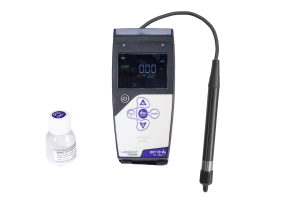
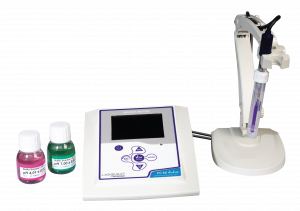
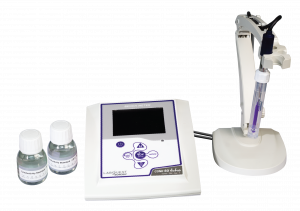
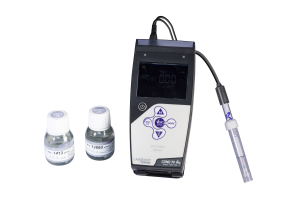
Electrochemical analysis is the foundation for most modern laboratory tests conducted in educational, academic, research, and environmental laboratories. Regardless of whether the goal is to determine the stable pH, ionic conductivity, or dissolved oxygen concentration, the accuracy of the experiment depends on how well the instruments are utilised. Borosil Scientific develops a complete suite of instruments designed for accuracy, durability, and traceability. Each model, from portable meters to advanced bench-top systems, complies with GLP standards and supports reproducible data for regulated environments.
Common Applications of Electrochemistry Equipment
Electrochemical testing enables scientists to evaluate chemical properties through electrical measurement. Typical applications include:
| Laboratory Sector | Primary Use | Typical Instrument |
| Pharmaceutical QC | pH monitoring, dissolution analysis | pH 80 Bench Top Meter |
| Environmental Testing | DO, salinity, conductivity, pH | OXY 70 Portable Meter, COND 70 Portable Meter |
| Food & Beverage QC | Salinity and ionic strength checks | COND 60 Bench Top Meter |
| Academic & R&D Labs | Multi-parameter testing and method validation | PC 60 Bench Top Meter |
| Water Treatment | Continuous conductivity and TDS testing | COND 70 Portable Meter |
For each of these uses, the electrodes must respond accurately, the calibration must be exact, and the data collection must be consistent. Instruments developed by Borosil Scientific integrate data logging, USB connectivity, and multilingual interfaces to simplify workflow in busy labs.
Portable Electrochemistry Meters
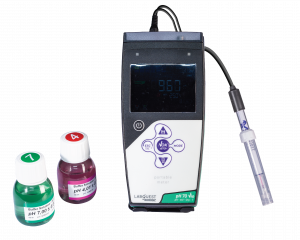
When testing in the field, mobility and consistency are very important. The portable electrochemistry meters manufactured by Borosil Scientific are designed for on-site testing in a range of temperature and humidity conditions. Some of these are:
| Model | Measurement Parameters | Data Capacity | Key Features |
| OXY 70 Portable Meter | Dissolved Oxygen, Temperature | 1000 data logs | GLP functions, automatic brightness control, 6-button interface |
| COND 70 Portable Meter | Conductivity, TDS, Salinity | 1000 data logs | Robust housing, micro-USB connectivity, PC integration |
| pH 70 Portable Meter | pH, mV, Temperature | 1000 data logs | Quick calibration, ergonomic design, backlit display |
Each portable model comes with GLP-compliant documentation, auto-logging, and manual logging, as well as secure data export via micro-USB. The design prioritises operator comfort while maintaining measurement accuracy. For instance, the OXY 70 Portable Meter utilises galvanic DO sensors, eliminating the need for warm-up time and allowing for immediate use in aquatic or wastewater testing.
Operating Principles of Electrochemistry Instruments
The working principle behind each system is in measuring ionic movement or potential difference within a sample. Every meter type uses a unique sensing mechanism:
| Measurement Type | Detection Method | Instrument Example | Calibration Range |
| pH | Glass electrode measuring H⁺ ion activity | pH 80 Bench Top Meter | 1–5 points automatic/manual |
| Conductivity | AC voltage applied through 2/4-ring cell | COND 60 Bench Top Meter | 0.1 / 1.0 / 10 cell constants |
| Dissolved Oxygen | Galvanic cell with oxygen-permeable membrane | OXY 70 Portable Meter | Factory calibrated, user resettable |
| ORP | Platinum electrode vs. reference | pH 80 Bench Top Meter | 1-point calibration |
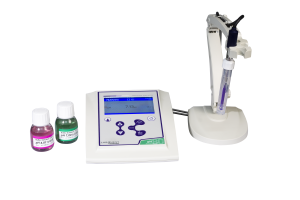
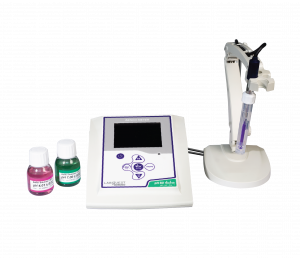
Advanced bench models, such as the PC 80 PRO Series, allow for the simultaneous measurement of up to six parameters. They feature automatic temperature compensation, ultra-pure water correction, and electrode condition graphs. The large backlit colour display offers complete visibility of calibration data, user profiles, and alarm thresholds.
Important Safety Tips for Using Electrochemistry Equipment
Instrument accuracy and longevity depend heavily on correct maintenance. Follow these recommendations:
- Rinse between samples: Always use deionised water to prevent carry-over of ionic residue.
- Use certified buffers: pH calibration solutions should be within the correct range for the job; store them at the recommended temperature.
- Avoid thermal shock: Allow sensors and samples to reach ambient temperature before measurement.
- Inspect electrodes: Replace cracked or low-response electrodes promptly.
- Backup data regularly: Use the proper recommended software for PC export and audit traceability.
For pH and conductivity models, the calibration due alert serves as a preventive reminder. Ignoring recalibration can introduce measurement drift of up to 2-3% over time.
Advantages of Borosil Scientific Electrochemistry Instruments
| Feature | Benefit | Model Reference |
| GLP-compliant data management | Secure traceability and audit trail | All 60/70/80 series |
| Multilingual operation | Six-language menu for diverse teams | 80 PRO Series |
| Adaptive display brightness | Extended field battery life | OXY 70 Portable Meter |
| Multi-point calibration | Enhanced linearity and precision | pH 80, COND 60 |
| Robust electrode compatibility | Stable readings across harsh media | pH and COND series |
| Large data storage | Up to 8000 GLP entries | PC 80 Bench Top Meter |
All instruments from Borosil Scientific are designed to handle repetitive testing with minimal maintenance. The hardware casing resists chemical corrosion, while the sensors maintain calibration integrity even after repeated sterilisation cycles. For environmental monitoring, portable models are IP-rated for dust and splash resistance.
Clean electrodes with deionised water after each use. Store pH sensors in the electrode storage solution. Replace membranes and electrolyte in DO probes periodically. Avoid strong acids unless specified in the manual.
Borosil Scientific meters measure pH, mV, ORP, conductivity, TDS, salinity, and dissolved oxygen. Specific models combine these with temperature compensation for comprehensive chemical profiling.
Accuracy typically ranges from ±0.002 pH to ±0.5% of reading for conductivity, depending on the model. Instruments undergo batch-wise calibration and validation, supported by a Certificate of Analysis.
Yes. Portable versions like the OXY 70 and COND 70 are designed to work well in rough outdoor conditions. They give accurate readings even when temperatures and salinity levels change.
Individual units do not include a calibration certificate, but each lot is issued a CoA confirming compliance with ISO standards.