














UV Visible Spectrophotometers

-
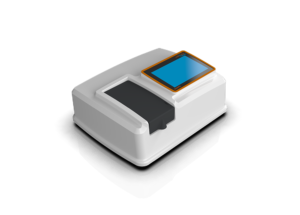
Quanta Pro/ Quanta Promax
The Quanta Pro and Promax series of UV visible spectrophotometers are powered with high sensitivity, accuracy, and reproducibility Applications finds...View Details
What is a UV Visible Spectrophotometer?
A UV Visible Spectrophotometer is an analytical instrument that measures the amount of ultraviolet and visible light absorbed by a sample solution relative to a reference. This measurement follows the Beer–Lambert law, where absorbance is proportional to the concentration of the absorbing species and the optical path length.
These instruments typically cover wavelengths across the ultraviolet and visible regions, generally spanning from around 180 nm to 1100 nm, depending on model configuration. The ultraviolet region lies below 400 nm, while the visible region extends from approximately 400 nm to about 780 nm. By analysing absorbance across this range, laboratories can quantify analytes and support compound identification.
Applications Across Industries
The versatility of UV Visible Spectrophotometers makes them essential across various sectors requiring quantitative analysis and quality control.
| Industry | Application |
| Pharmaceuticals | Purity testing, dissolution testing, and assay of active pharmaceutical ingredients (APIs). |
| Environmental | Water quality testing to detect nitrates, phosphates, and heavy metals. |
| Food & Beverage | Analysis of additives, preservatives, and colourants to ensure regulatory compliance. |
| Chemical | Quality control of raw materials and finished products; kinetics studies. |
| Education & Research | Teaching fundamental principles of spectroscopy and conducting advanced molecular research. |
Types of UV Visible Spectrophotometers We Offer
Borosil Scientific offers UV Visible Spectrophotometers designed to meet diverse laboratory requirements. The primary models available are the Quanta Pro and Quanta Promax series.
Quanta Pro / Quanta Promax Series
The Quanta Pro and Quanta Promax series deliver reliable analytical performance with true double-beam optics, supporting stable, accurate, and reproducible measurements for routine and critical laboratory analyses.
| Feature | Quanta Pro / Quanta Promax Specification |
| Optical System | True double-beam optics |
| Wavelength Range | Covers approximately 180 nm to 1100 nm, depending on model configuration |
| Bandwidth | Configurable spectral bandwidth options, depending on model configuration |
| Detector | Silicon photodiode detectors used in Quanta Pro / Quanta Promax models |
| Light Source | Deuterium and halogen light sources, depending on model configuration |
Key Features & Benefits
Selecting the correct UV Visible Spectrophotometer requires an understanding of specific features that contribute to operational efficiency and data integrity.
- High Stability: The double-beam optical system ensures long-term stability by correcting for changes in the light source intensity over time.
- Wide Wavelength Range: The wide wavelength coverage supports analysis of a broad range of compounds, from organic molecules absorbing in the ultraviolet region to coloured complexes in the visible region.
- Variable Bandwidth: Selectable spectral bandwidths allow users to optimise resolution and sensitivity based on the sample type.
- User-Friendly Interface: Modern interfaces facilitate easy method setup, data storage, and result retrieval.
- Data Processing: Built-in software often supports photometric measurement, spectrum scanning, quantitative determination, and kinetic analysis.
These technical attributes ensure that the Quanta Pro and Quanta Promax series adhere to stringent analytical standards for quantitative and qualitative laboratory assessment.
Certifications & Compliance
Laboratories operating under GLP or GMP frameworks require instruments that support validated analytical workflows. Borosil Scientific UV Visible Spectrophotometers are designed to facilitate compliance with laboratory quality requirements.
- IQ/OQ/PQ Support
The instruments are suitable for validation activities such as Installation Qualification, Operational Qualification, and Performance Qualification, as required in regulated laboratory environments. - Calibration Standards
Calibration is performed using traceable reference standards to support accurate photometric and wavelength measurements.
Together, these considerations help laboratories maintain regulatory compliance and ensure confidence in routine analytical results.
Validation involves checking parameters such as wavelength accuracy, photometric accuracy, stray light, and baseline flatness using certified reference materials (CRMs) or standard filters (e.g., Holmium Oxide for wavelength, Potassium Dichromate for photometric accuracy).
The principle is based on the absorption of light by molecules. Molecules absorb specific wavelengths of light, causing electrons to transition from lower to higher energy levels. The amount of light absorbed is proportional to the concentration of the absorbing species (Beer-Lambert Law).
Modern UV-Visible spectrophotometers commonly use silicon photodiode detectors. Borosil Scientific’s Quanta Pro and Quanta Promax series utilise high-sensitivity silicon photodiodes.
Filters are used to select specific wavelengths or remove unwanted diffraction orders. Monochromators (prisms or diffraction gratings) are more commonly used in scanning spectrophotometers to disperse white light into component wavelengths.
A UV spectrophotometer measures absorbance in the ultraviolet region, typically below 400 nm, based on electronic transitions in molecules. The absorbance follows the Beer–Lambert law and is used to quantify analytes.