







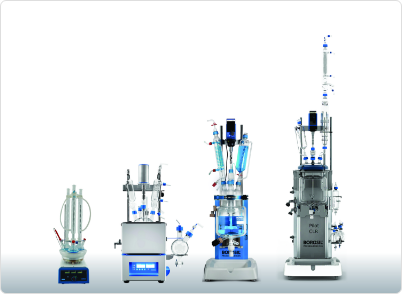



Temperature control is a fundamental requirement in chemical synthesis, pharmaceutical processing, and materials science. From exothermic polymerisation to crystallisation processes, maintaining precise thermal conditions is critical for reaction efficiency, yield optimisation, and process safety. This is where reaction vessel jackets play a crucial role.
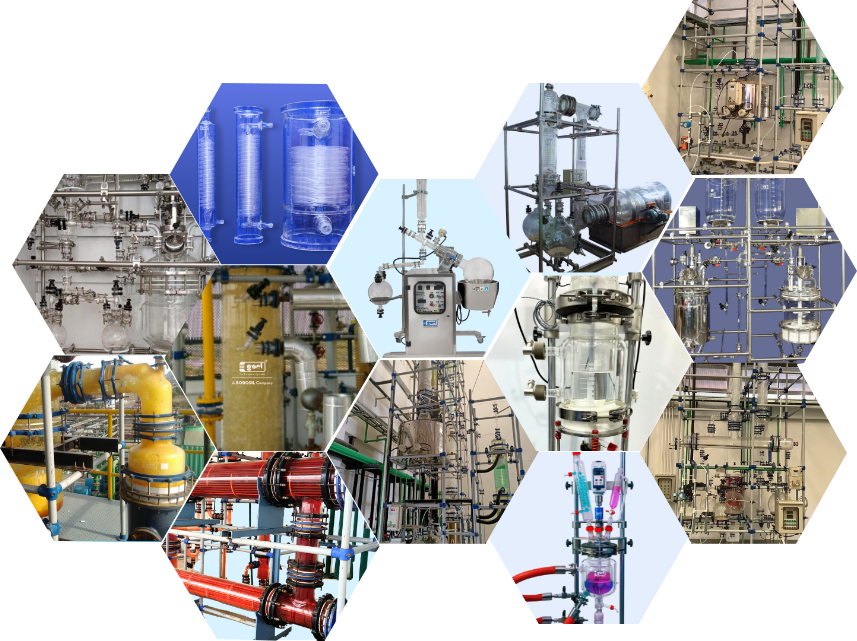
Jacketed reactors provide thermal regulation by circulating heating or cooling fluids around the vessel. The choice of reactor jacket types determines heat transfer efficiency, response time, and energy consumption, all of which impact process control and scalability.
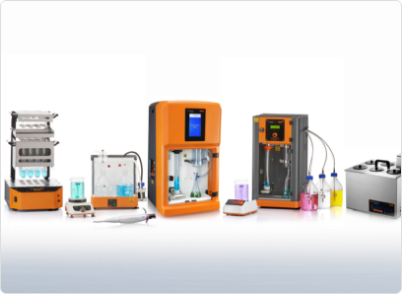
For advanced laboratories and pharma-scale production, integrating automated control systems with reactor jackets further refines precision, reduces human error, and enhances reproducibility. Borosil Scientific’s Automated Reaction Systems are designed for this level of temperature-sensitive processing.
This guide provides a detailed overview of what a reaction vessel jacket is and how it functions, the types of reactor jackets and their applications, their benefits, and how automation enhances process control.
A reaction vessel jacket is an outer casing around a reactor or mixing vessel, which permits a controlled flow of heating or cooling fluids. This provides precise thermal control, which is a requirement for reactions involving precise temperature ranges.
| Function | Why It Matters |
| Heating & Cooling | Maintains optimal reaction temperature |
| Process Safety | Prevents runaway reactions in exothermic systems |
| Reproducibility | Ensures consistent yields in pharma & fine chemicals |
| Scalability | Enables transition from lab-scale to production |
Jacketed reactors are used in:
In drug manufacturing, jacketed reactors provide accurate temperature control for the synthesis and crystallisation of active pharmaceutical ingredients (API). Fluctuations in temperature may affect drug purity, solubility, and particle size distribution. With automated thermal control, producers ensure GMP compliance, improve batch reproducibility and avoid unwanted polymorphic conversions necessary for regulatory compliance.
Polymerisation reactions are highly exothermic, requiring efficient heat removal to prevent runaway reactions. Jacketed reactors facilitate controlled monomer conversion, ensuring consistent molecular weight distribution in plastics, resins, and synthetic rubber production. In petrochemical processing, temperature stability impacts catalytic efficiency and yield optimisation, making half-pipe coil jackets ideal for continuous processing and large-scale operations.
Bioprocessing applications, including enzyme production, microbial fermentation, and cell culture, require strict thermal stability to sustain optimal metabolic activity. Jacketed bioreactors maintain consistent fermentation temperatures, preventing thermal stress on microorganisms. Integration with automated reaction systems allows real-time pH, temperature, and agitation control, essential for high-yield bioengineering applications.
Material synthesis, including nanoparticle fabrication, ceramics, and advanced composites, demands precise thermal regulation to control crystal growth, reaction kinetics, and structural properties. Jacketed reactors enable dynamic heating and cooling cycles, supporting sol-gel synthesis, electrochemical deposition, and high-temperature sintering. In R&D settings, automation enhances data accuracy and process repeatability.
For complex workflows, Borosil Scientific’s Automated Reaction Systems offer SCADA-based control, power distribution management, and multi-device integration.
Different reactor jacket types exist to serve varied process needs. The selection depends on factors such as heat transfer efficiency, fluid dynamics, and mechanical durability.
Comparison of Reactor Jacket Types
| Jacket Type | Heat Transfer Efficiency | Fluid Circulation | Best Applications |
| Single Jacket | Moderate | External circulation | General heating/cooling |
| Dimple Jacket | Low to moderate | Structured pockets | Pressurised applications |
| Half-Pipe Coil | High | Direct pipe system | High-viscosity materials |
| Limpet Coil | High | External welded coil | Rapid heating/cooling |
| Internal Coil | Very high | Immersed in fluid | Fast-response systems |
For pharmaceutical synthesis, a half-pipe coil jacket provides precise thermal exchange, ensuring batch consistency. In contrast, a dimple jacket is suited for high-pressure reactions, often seen in industrial-scale polymerisation.
For laboratories scaling up, Borosil Scientific’s Auto Expert allows multi-reactor control (up to 4 devices), ensuring precise temperature synchronisation across different stages.
A jacketed reactor is not just a thermal regulator, it is an efficiency driver in process industries.
By integrating automated systems with precision-engineered reactor jackets, process efficiency and batch reproducibility are significantly improved.
Choosing the appropriate reactor jacket requires an understanding of reaction kinetics, heat transfer needs, and scale-up feasibility.
| Selection Factor | Key Considerations |
| Reaction Type | Endothermic vs. Exothermic |
| Temperature Control | Stability vs. Rapid Change |
| Scalability | Lab vs. Industrial |
| Automation Needs | Manual vs. PC-Based |
For researchers requiring highly controlled thermal processes, Borosil’s Auto Advanced provides PC-based SCADA control, enabling precise temperature and agitation adjustments across multiple reactors simultaneously.
Modern process control demands automation. Laboratories moving toward precision synthesis benefit from intelligent control systems that integrate with jacketed reactors.
| Model | Device Integration | Control Features |
| Auto Basic | Up to 2 Devices | Manual & Digital |
| Auto Expert | Up to 4 Devices | Temperature & Mixing Control |
| Auto Advanced | 8+ Devices | SCADA-based Automation |
These systems optimise:
Automated control eliminates human error, ensuring data integrity in regulated industries like pharmaceutical manufacturing and fine chemical processing.
A reaction vessel jacket is an essential component for controlled temperature regulation in chemical and pharmaceutical industries. Selecting the right jacket type optimises heat transfer efficiency, reaction kinetics, and process safety.
For researchers and manufacturers transitioning to automated process control, Borosil Scientific’s Automated Reaction Systems provide:
At Borosil Scientific, we engineer solutions that enhance reaction efficiency, reproducibility, and safety. Whether you need a jacketed reactor for pilot-scale synthesis or a fully automated production system, our technology ensures precision at every stage. Explore Borosil Scientific’s reactor solutions today.