










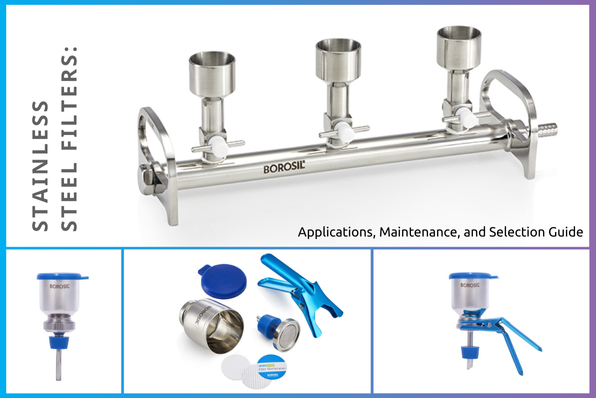
Ensuring reliable filtration is very important when you’re running tests, preparing samples, or conducting precise analyses in a laboratory. Whether working in a pharmaceutical R&D unit or handling delicate chemical samples at a quality control facility, choosing a stainless steel filter can simplify your workflow and help you maintain data integrity. These filters handle tough solvents and last longer, reducing the total cost over time.
This guide explores the various applications of stainless steel filters, how to maintain them for longevity, and the factors to consider when selecting the right type for your needs. The goal is to help you understand why a stainless steel filter is worth your attention, how to keep it in good condition, and how to pick the right one for your laboratory’s needs.
Stainless steel filters are designed to handle harsh conditions that might quickly wear down traditional glass filtration devices. Made from robust, corrosion-resistant alloys like SS316, these filters withstand aggressive solvents, heat, and high pressure. This durability, with ease of cleaning and long operational life, makes them a preferred choice for demanding laboratory settings. The versatility of stainless steel filters makes them suitable for various uses, spanning scientific research, industrial processing, and chemical analysis. Here’s how they’re applied in different fields:
Stainless steel filters are a staple in research labs, particularly for vacuum filtration. They are ideal for filtering HPLC solvents, aqueous mobile phase solutions, and buffers. The use of high-quality SS316 funnels ensures minimal chemical interaction, making them reliable for delicate analytical processes.
The chemical industry often deals with highly reactive substances that can corrode traditional filtration materials. Stainless steel filters, with their SS316L membrane support screens, resist chemical degradation and maintain structural integrity, even when exposed to harsh solvents.
Stainless steel’s corrosion resistance makes it ideal for filtering liquids in the food and beverage industry. Whether removing impurities from water or ensuring the clarity of beverages, these filters are highly efficient and hygienic.
In pharmaceutical labs, where precision is non-negotiable, stainless steel filters play a critical role in filtration processes. Their autoclavable nature ensures sterility, while their robust construction supports repeated use.
Different filtration tasks require specific equipment, and stainless steel filter funnels cater to varied needs. Let’s look at three common types available to order from us.
The spin-lock mechanism makes this funnel user-friendly, allowing quick and secure locking. It includes a silicone stopper, a stainless steel support screen, and a durable SS316 funnel body. Ideal for HPLC solvent filtration, it is autoclavable, sturdy, and easy to clean.
This design features an aluminium clamp for secure locking and added convenience during filtration. Available in capacities ranging from 300 ml to 1 litre, the external clamp model offers exceptional durability and ensures precise filtration processes.
This variant simplifies the setup process with its integrated clamp, eliminating the need for additional external accessories. Its SS316 construction minimises solvent interaction, while the silicone O-ring provides a leak-proof seal.
| Feature | Spin-Lock Funnel | External Clamp Funnel | In-Built Clamp Funnel |
| Capacity | 300 ml to 1 L | 300 ml to 1 L | 300 ml to 1 L |
| Clamp Mechanism | Spin-lock | External clamp | Integrated clamp |
| Material | SS316 | SS316 | SS316 |
| Autoclavable | Yes | Yes | Yes |
Proper maintenance of stainless steel filters ensures their efficiency and extends their lifespan. Here are some tips to keep them in top shape:
Stainless steel filters should be cleaned after every use to prevent clogging and ensure accurate filtration. Use mild detergents or cleaning agents compatible with stainless steel to remove residues. Avoid abrasive materials that could damage the filter surface.
Autoclaving the filters is essential for laboratory and pharmaceutical applications. Ensure all parts, including the support screens and silicone stoppers, are thoroughly cleaned before autoclaving.
Periodically inspect the filter components for wear, corrosion, or deformation signs. Replace parts like O-rings and support screens to maintain performance if they show any damage.
Store the filters in a dry, dust-free environment when not in use. Moisture can lead to surface corrosion over time, even with high-grade stainless steel.
Choosing the right filter involves evaluating its compatibility with your application and operational requirements. Here’s what to consider:
Stainless steel filters offer several benefits over other alternatives:
Stainless steel filters are essential in laboratories, chemical plants, and pharmaceutical manufacturing units. Their durability, chemical resistance, and versatility make them an excellent choice for a wide range of filtration needs. Whether you require a spin-lock funnel for precision HPLC work or an in-built clamp model for quick setups, selecting the right stainless steel filter can elevate the efficiency of your processes.
At Borosil Scientific, we offer an array of stainless steel filtration solutions designed for precision, durability, and ease of use. Our team is dedicated to supporting your filtration needs with innovative products that meet the highest quality and performance standards. Contact us today to find the perfect stainless steel filter for your applications.