








Pipettes are more than just tools. They play a crucial role in ensuring accurate liquid handling in any well-equipped laboratory. From quality control labs in pharmaceutical plants to life sciences and academic research, pipettes play a significant role in day-to-day workflows. However, choosing the right one and, more importantly, using it correctly, ensures your positive results in any experiment.
This article breaks down the different types of pipettes, explains how each one works, and identifies what makes them suitable for specific lab tasks. All information here is drawn from certified, laboratory-validated glassware.
When the task involves transferring a fixed, precise volume, volumetric pipettes are the gold standard. They’re calibrated to deliver (TD) a specific volume, making them ideal for quantitative analysis.
Volumetric pipettes are widely used for preparing standard solutions in analytical chemistry. Borosil Scientific’s Class A certified volumetric pipettes offer traceability, accuracy, and chemical durability, essential for labs under compliance pressure.
Mohr pipettes allow the transfer of different volumes, with graduations starting above the tip. These are not as precise as volumetric pipettes, but they are ideal when flexibility is more important than absolute accuracy.
In quality control routines where volumes vary slightly between processes, such as in food and beverage laboratories or during reagent transfers, Mohr pipettes provide a reliable and accurate solution without the need for multiple volumetric pipettes.Micropipettes: Sub-Millilitre Precision
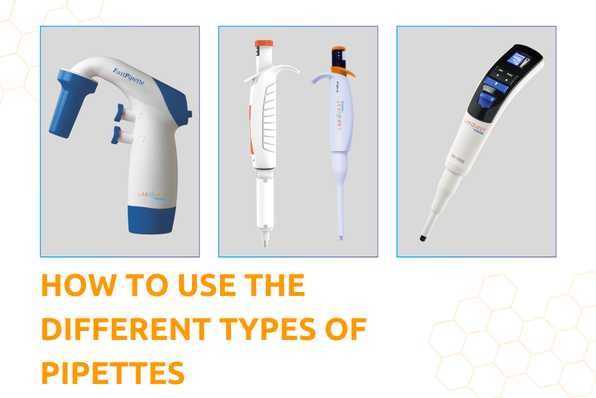
For anything under 1 mL, especially in microlitre ranges, micropipettes are the go-to solution. These are most commonly used in clinical diagnostics, molecular biology, and pharmaceutical research and development.
| Volume Range | Features | Certification |
| 1– 10 µL | High precision, easy maintenance | ISO 8655 |
| 10 – 200 µL | Ergonomic grip, intuitive control | ISO 8655 |
| 20 – 10000 µL | Balanced comfort, consistent output | ISO 8655 |
Micropipette errors often stem from poor technique, rather than the instrument itself. Borosil Scientific’s micropipettes feature smooth plunging mechanisms and well-calibrated controls, supporting repetitive pipetting with minimal hand fatigue.
Specialised pipettes, like those used in milk testing, require strict standardisation. These are calibrated according to established dairy testing methods and are part of Borosil Scientific’s dairy lab glassware range.
Labs using these should always verify calibration integrity, especially when results are included in regulatory reporting.
Drum sampling pipettes are used to withdraw liquid samples from chemical drums or large containers. These are designed for robustness and chemical resistance, especially when samples are collected from heights or depths.
Artificial insemination pipettes, on the other hand, are specifically designed for veterinary labs and require sterility and a consistent bore size. These are usually single-use or autoclavable.
Borosil Scientific offers these pipettes based on requirement-specific sourcing. They are not part of standard glassware distribution but can be provided under industrial order flows.
Every pipette, whether it’s Class A glassware or a variable micropipette, requires scheduled calibration to remain accurate.
Borosil Scientific includes calibration documentation wherever applicable and provides individual or batch certification in accordance with ISO and NABL standards.
Always select the pipette with the lowest upper limit that can still accommodate your required volume. For example, use a 2–20 µL micropipette instead of a 100–1000 µL one for 10 µL samples.
Borosil Scientific pipettes are made from 3.3 borosilicate glass; Hence, you should avoid use with HF or hydrofluoric acid. For those, polymer-based products are used under controlled conditions but are not part of Borosil Scientific’s current manufacturing.
If your process falls under audit, use pipettes with traceable certification (e.g., 2040 Volumetric Pipette with individual COA or 7058 Milk Pipette with dairy lab compliance).
Repetitive pipetting tasks (as seen in diagnostic labs) demand ergonomic models like the C2 and C3 micropipettes, which reduce fatigue.
Whether you are dispensing 10 µL of buffer into a PCR tube or measuring 11 mL of milk for fat testing, choosing the correct pipette is crucial. The type of pipette you use and how you use it can influence everything from product quality to audit success.
At Borosil Scientific, we offer certified, accurate, and ergonomically designed pipettes across various categories, ranging from Class A volumetric glass pipettes to comfort-fit micropipettes, each designed to deliver confidence in every drop.
If your lab requires precision, traceability, and long-term value, please speak with our team or browse our comprehensive catalogue to select the ideal pipette for your application.