







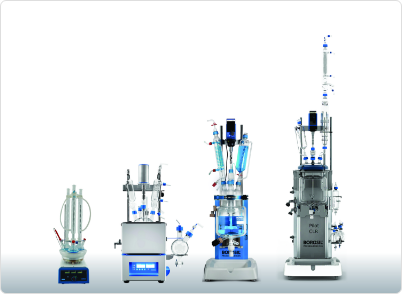

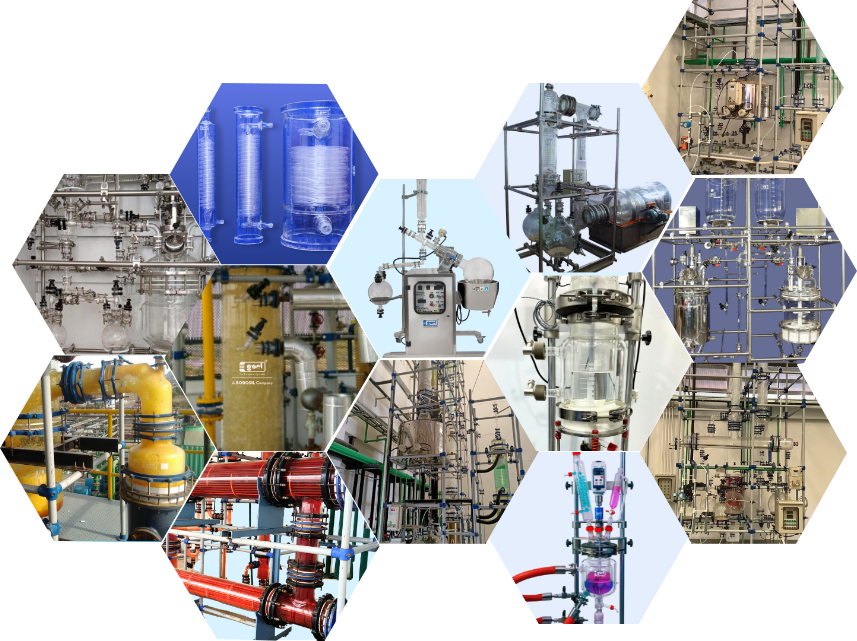



Lab Condensers & Extractors
Types of Laboratory Condensers
A laboratory condenser facilitates the cooling of vapours, converting them back into a liquid state through heat transfer. This process is essential for reflux and distillation applications. Borosil Scientific offers specific condensers designed for integration with extraction apparatuses.
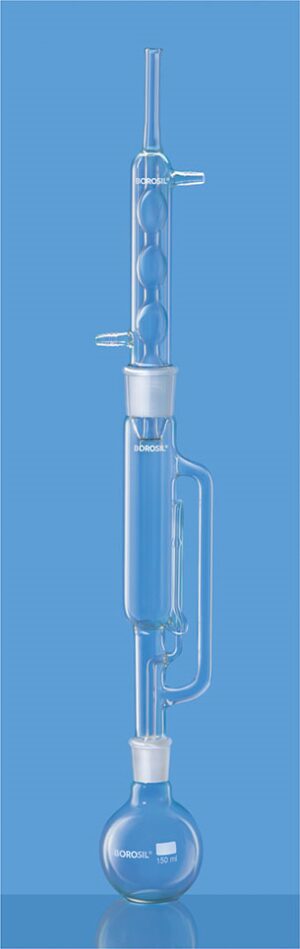
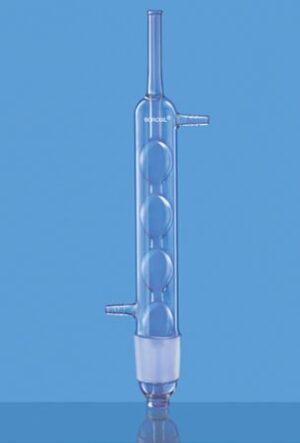
The 3741 – Condenser For Extraction Apparatus is an Allihn-style condenser, often referred to as a “bulb condenser.” It features a series of bulbs that increase the surface area available for condensation. This design provides a higher cooling capacity compared to straight-tube condenser designs, making it suitable for applications requiring efficient heat exchange.
Specifications for 3741 – Condenser For Extraction Apparatus:
|
Product Code |
Capacity Designation |
Interchangeable Joints (Cone) |
Quantity Per Case |
|
3741013 |
Small |
34 / 35 |
5 |
|
3741016 |
Medium |
40 / 38 |
5 |
|
3741020 |
Large |
50 / 42 |
5 |
The vapour tube in this design serves a dual purpose: it allows vapour to rise into the condenser and protects the siphon tube of the extractor from accidental damage during handling.
Types of Laboratory Extractors
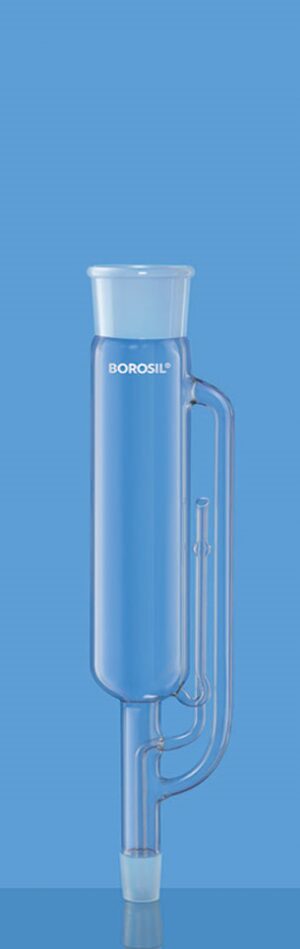
Extractors are used to isolate a desired compound from a solid sample using a solvent. The most common type is the Soxhlet extractor. The 3740 – Soxhlet For Extraction Apparatus enables continuous extraction with efficient use of solvent.
This apparatus functions by cycling the solvent through the solid sample. As the solvent boils, vapour rises to the condenser, liquefies and drips onto the sample. Once the extraction chamber fills, a siphon mechanism drains the solvent (now containing the extract) back into the boiling flask.
Key Features of the 3740 Soxhlet Extractor:
- Siphon Design: Designed with a bulb in the siphon tube near the top to aid the siphoning action.
- Compliance: Complies with IS 10640 standards.
- Interchangeability: Features interchangeable joints for secure assembly.
Specifications for 3740 – Soxhlet For Extraction Apparatus:
|
Product Code |
Capacity (ml) |
Socket Joint |
Cone Joint |
|
3740013 |
60 |
34 / 35 |
24 / 29 |
|
3740016 |
100 |
40 / 38 |
24 / 29 |
|
3740020 |
200 |
50 / 42 |
24 / 29 |
Applications of Condensers and Extractors in Laboratories
The primary application of lab condensers & extractors lies in the separation of extracts from liquid or solid mixtures. The 3840 – Soxhlet Extraction Apparatus Set supports the effective separation of extracts from liquids or solids under reflux conditions.
This method enables effective separation where compounds have limited solubility in a solvent, requiring repeated exposure. The increased surface area of the condenser bulbs ensures that solvent vapour is efficiently returned to the solid sample, maintaining the extraction cycle without solvent loss.
Common Applications:
- Fat Analysis: Determining fat content in food samples.
- Environmental Testing: Extracting contaminants from soil or sludge.
- Pharma Analysis: Isolating active ingredients from medicinal plants.
Choosing the Right Condenser or Extractor for Your Needs
Selecting the correct lab condensers & extractors depends on the volume of sample material and the required solvent capacity. Compatibility between the flask, extractor and condenser joints is vital to prevent leaks of hazardous solvent vapours.
The 3840 – Soxhlet Extraction Apparatus Set provides matched components to ensure a secure fit. Users must verify the capacity requirements, as the flask size correlates with the extraction volume.
Selection Guide for 3840 Extraction Sets:
|
Product Code |
Extractor Capacity (ml) |
Flask Size (ml) |
Suitability |
|
3840013 |
60 |
150 |
Small-scale analysis |
|
3840016 |
100 |
250 |
Routine laboratory extraction |
|
3840020 |
200 |
500 |
Medium volume extraction |
|
3840024 |
500* |
2000 |
Large sample processing |
|
3840029 |
1000* |
3000 |
Large-volume laboratory extraction |
|
3840030 |
2000* |
5000 |
Bulk extraction |
*Note: Larger capacities are available for large-volume laboratory extraction applications.
Maintenance and Care Tips for Laboratory Glassware
Proper maintenance of lab condensers & extractors extends their operational lifespan and ensures safety.
- Cleaning: Residue from extractions can be stubborn. Rinse immediately after use with an appropriate solvent.
- Greasing Joints: Lightly grease interchangeable joints to prevent them from seizing, especially during heating cycles.
- Inspection: Regularly check the siphon tube on the Soxhlet extractor and the bulbs on the condenser for star cracks or chips. Damaged glassware under thermal stress poses a safety risk.
- Storage: Store components separately to avoid breakage of delicate internal tubes.
A laboratory condenser cools vapours generated by heating, converting them back into liquid form. In extraction assemblies, it returns the solvent to the extraction chamber to continue the process.
A Soxhlet extractor allows for the continuous extraction of a solid by a solvent. Vapour rises to the condenser, drips onto the solid and once the chamber is full, the solvent containing the extract siphons back into the boiling flask.
The mechanism relies on a siphon tube. When the liquid level in the extraction chamber exceeds the top of the siphon bend, gravity pulls the liquid down into the flask below, emptying the chamber and restarting the cycle.
Glassware should be cleaned with suitable solvents compatible with the residue. Joints should be kept clean and lightly greased. Avoid thermal shock by allowing the apparatus to cool slowly before disassembly or cleaning.