











Laboratory Bottles


Laboratory Bottles
In every laboratory setting, precision begins with the tools used to handle materials. Laboratory glass bottles play a vital role in maintaining that precision, whether in pharmaceutical research, academic studies, or diagnostic applications. They are not merely vessels for holding substances but integral instruments designed to store, dispense, mix, and transfer sensitive reagents with reliability.
Types of Laboratory Bottles
Laboratory bottles come in a wide range of designs, each made for a specific purpose. The most common include:
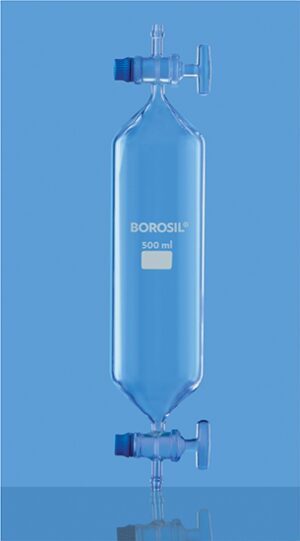
- Aspirator Bottles: Typically used for storing or draining liquids via gravity and are available with I/C glass stopcocks and PP caps. Certain models feature socket outlets for direct tap control.
- Dropping Bottles: Designed for precise liquid dispensing, often in titration or sample preparation. Variants are available with rubber teats and glass droppers, in either amber for light-sensitive materials or clear for general use.
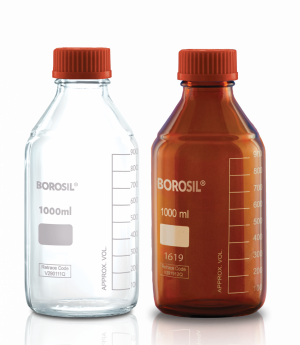
- Reagent Bottles: These are used to store chemical reagents. Options range from narrow-mouth to wide-mouth, with either screw caps or I/C glass stoppers.
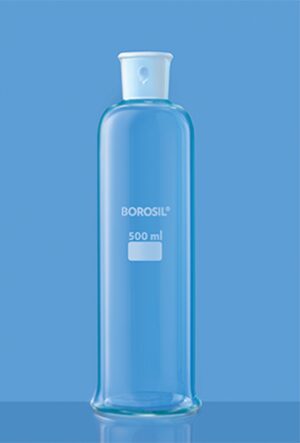
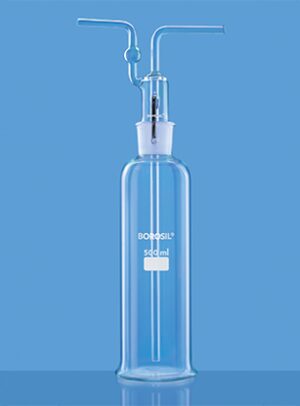
- Glass Wash Bottles: Used for rinsing glassware or diluting substances. Commonly provided in sets with flasks, interchangeable stoppers, and sometimes PP caps.
- Weighing Bottles: Designed to hold samples during weighing. Amber or clear glass versions are available, both featuring I/C lids that reduce contamination.
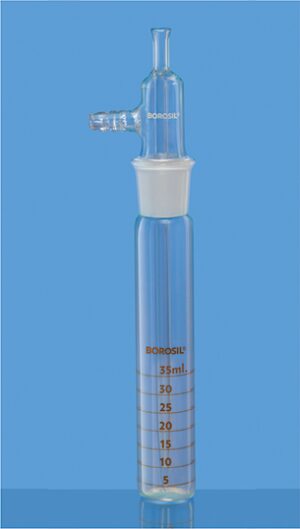
- Density Bottles (Pyknometers): Precision bottles with calibrated volume used to determine the specific gravity or relative density of a substance. Some models come with PTFE stoppers and certificates of calibration.
- BOD Bottles: Designed for biochemical oxygen demand analysis in water testing. These are typically glass bottles with a high-pressure sealing design.
- Solution Bottles: Used to store standard solutions; available in amber and clear glass with tooled necks for better sealing.
Materials Used in Laboratory Bottles
Glass
Most bottles used in laboratories are made of borosilicate glass due to its high thermal and chemical resistance. The grade 3.3 borosilicate is commonly used in labs and works well for heating, autoclaving, and long-term storage. When you need UV protection, use amber glass. In this case, an amber borosilicate glass iodine bottle is the best choice.
Cap and Closure Material
Stoppers and screw caps can be made from polypropylene, PTFE, or rubber, depending on chemical compatibility. Certain density bottle models from Borosil Scientific use PTFE stoppers with I/C design to get leak-proof performance.
Choosing the Right Laboratory Bottle
| Bottle Type | Best For | Available Material | Amber Option | Closure Type |
| Reagent Bottle | General chemical storage | Glass | Yes | Screw cap / Glass stopper |
| Aspirator Bottle | Gravity drainage | Glass | Not required | I/C Stopcock + PP cap |
| Glass Wash Bottle | Glassware rinsing | Glass / LDPE | Yes | Stopper / Squeeze type |
| Dropping Bottle | Small volume dispensing | Glass | Yes | Dropper + Rubber teat |
| Weighing Bottle | Sample weighing | Glass | Yes | I/C glass lid |
| Density Bottle | Specific gravity determination | Glass | Not required | PTFE stopper |
| Solution Bottle | Standard solution storage | Glass | Yes | Tooled neck |
| BOD Bottle | Water analysis (oxygen demand) | Glass | Not required | Ground neck |
Laboratory Bottle Applications
- Reagent Preparation: In wet labs, chemicals are often prepped and stored in reagent bottles that maintain airtight conditions. Narrow-mouth versions are used when minimising contamination is critical.
- Titration and Dispensing: In titration setups, dropping bottles allow precise delivery. They’re commonly used with indicators or small-volume acids.
- Sample Analysis: During gravimetric analysis, powders or solid samples are transferred using weighing bottles with low moisture absorption and smooth interiors.
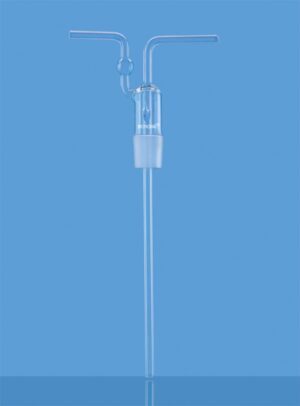
- Gas Analysis: Gas washing bottles, also known as Dreschel bottles, are used in scrubber units to absorb gases like SO₂ or Cl₂ through reagents.
- Water Quality Testing: BOD bottles help assess the biological oxygen demand in river or industrial discharge water, a critical metric for pollution control.
Proper Handling and Maintenance of Lab Bottles
Lab bottles are designed to withstand harsh conditions, but if you handle them properly, they will last significantly longer, and your work will remain safe. The basic rules are the same whether you’re using a high-precision density bottle or a glass wash bottle.
| Frequency | Task | Applies To |
| After each use | Rinse with distilled water | All bottle types |
| Weekly | Deep clean with lab-grade detergent | Reagent, solution, and wash bottles |
| Monthly | Inspect stoppers, threads, and necks | Glass bottles |
| Bi-annually | Calibrate volume (if applicable) | Density bottle, Pyknometer |
| Yearly | Replace worn-out rubber teats or caps | Dropping bottles, squeeze bottles |
Conclusion
At Borosil Scientific, we understand the critical role laboratory bottles play in ensuring accuracy and reliability in research and industrial processes. Our extensive range of laboratory bottles is engineered for consistency, durability, and chemical stability across diverse applications. For detailed specifications or technical support tailored to your project requirements, please contact Borosil Scientific.
Frequently Asked Questions
What are the bottles used in the laboratory?
The most common types of bottles used in the laboratory include reagent bottles, aspirator bottles, density bottles, and burettes (also known as dropping bottles).
What is the maximum operating temperature for a glass lab bottle?
A glass lab bottle can withstand temperatures up to 140°C for dry heat and 121°C for autoclaving. However, it’s very important to avoid sudden thermal shocks.
Can you dispose of glass laboratory bottles in a waste glass recycling facility?
Yes, you can, but only thoroughly cleaned and decontaminated glass bottles should be sent for recycling. Labware previously in contact with hazardous chemicals must follow specific disposal protocols.
What is the use of an amber bottle in a laboratory?
Amber bottles in a laboratory are used to protect light-sensitive substances from UV degradation and store iodine solutions, vitamins, or other photoreactive materials.