












Laboratory Burette

-

2149A – AutoBurettes
With Glass stopcock, Class A, Amber, with Individual Calibration CertificateView Details -
-
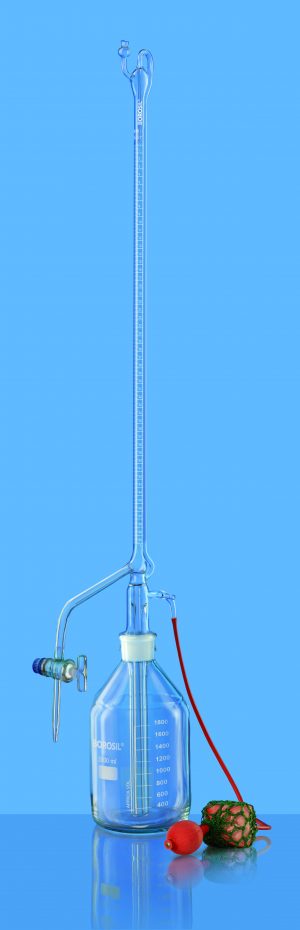
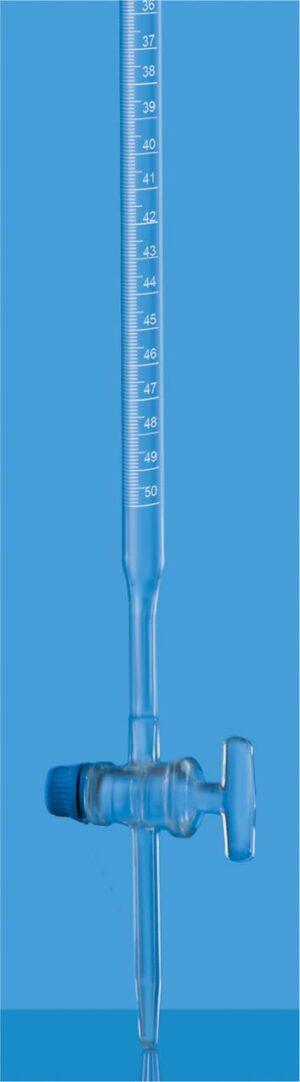
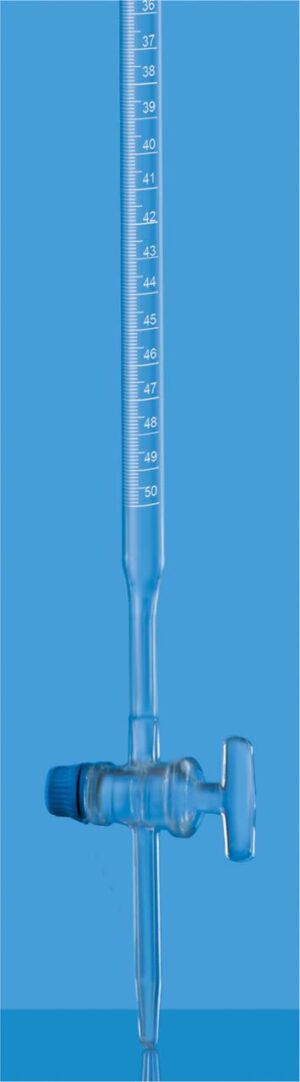
2149 – AutoBurettes
With Glass stopcock, Class A, with Individual Calibration CertificateView Details -
-
-
-
-
-
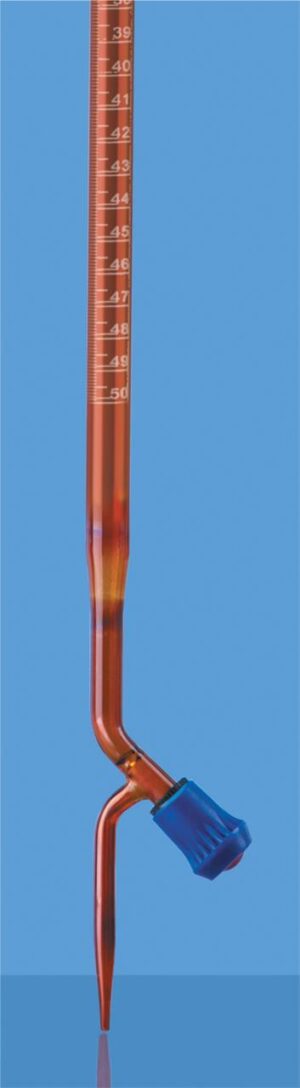
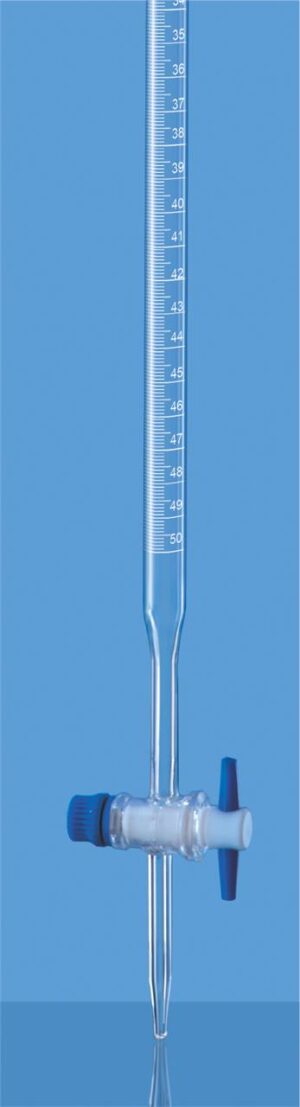
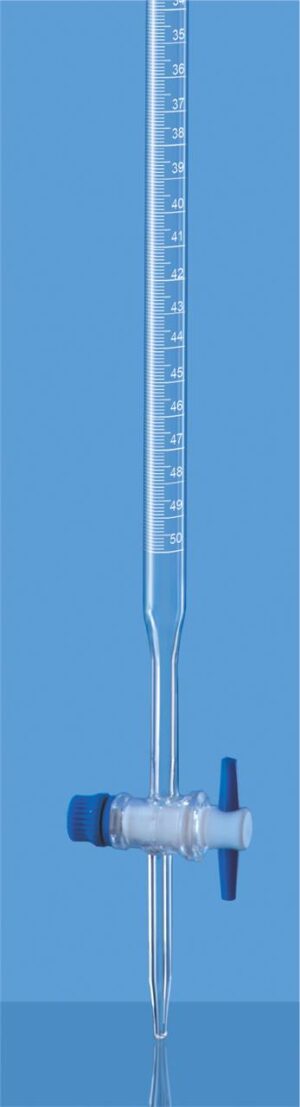
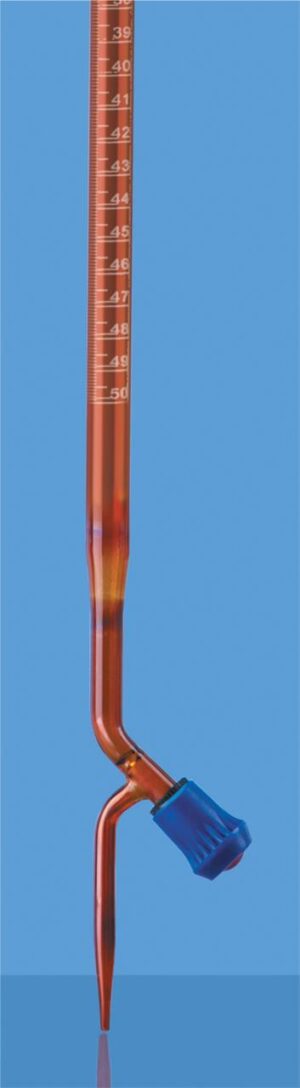
2131 – Burettes
With Boroflo stopcock, Class A, Amber, with Individual Calibration CertificateView Details
Types of Burettes We Offer
Borosil Scientific provides a comprehensive range of burette glassware designed to meet specific analytical requirements. The selection includes variations in accuracy classes, stopcock materials, and glass colour options to suit diverse chemical applications.
The following table outlines the primary specifications available in our catalogue:
| Feature | Specification Options | Description |
| Accuracy Class | Class A | Individually calibrated for high-precision work; supplied with an Individual Calibration Certificate for applicable models. |
| Class B | Suitable for general laboratory work and educational purposes. | |
| Stopcock Material | Boroflo (Screw Type) | Offers fine control over flow rates; requires no lubrication. |
| PTFE (Polytetrafluoroethylene) | Chemically resistant, lubrication-free operation. | |
| Glass | Precision-ground glass stopcock for standard applications; lubrication may be required. | |
| Glass Type | Clear Glass | Standard for most titration procedures. |
| Amber Glass | Available for light-sensitive solutions. | |
| Design Style | Standard Burette | Conventional manual burette for titration. |
| AutoBurette | Supplied with reservoir and rubber bellow with automatic zero facility. |
Applications of Burettes in Chemistry Labs
The burette chemistry lab setup is fundamental to quantitative chemical analysis. These instruments are engineered to dispense variable, measured amounts of a chemical solution.
Primary applications include:
- Acid-Base Titrations: Determining the concentration of an acid or base by neutralising it with a standard solution.
- Redox Titrations: Used in oxidation-reduction reactions to analyse the concentration of unknown analytes.
- Precipitation Titrations: Essential for determining the chloride ion concentration in water analysis.
- Standardisation: Verifying the exact molarity of a titrant before use in critical experiments.
For procedures involving reagents sensitive to UV light, such as iodine or silver nitrate, the use of amber burette glassware is necessary to maintain solution stability.
How to Choose the Right Burette for Your Lab?
Selecting the appropriate apparatus depends on the required precision and the chemical nature of the titrants used.
1. Accuracy Requirements
For analytical work requiring high precision, such as quality control in pharmaceutical testing, Class A burettes are recommended. Class A burettes are individually calibrated and supplied with an Individual Calibration Certificate for applicable models. This ensures the error margin remains within tight tolerances. For routine educational or qualitative work, Class B burettes provide a cost-effective solution.
2. Chemical Compatibility
The stopcock material dictates chemical compatibility. PTFE keys are chemically inert and resistant to attack from almost all chemicals, making them ideal for aggressive reagents. Glass stopcocks are suitable for standard solutions but may require lubrication to prevent seizing.
3. Operational Efficiency
Laboratories with high sample throughput may benefit from AutoBurettes. These units feature an integrated reservoir and a filling mechanism that sets the meniscus to zero automatically, reducing setup time between titrations.
Why Choose Borosil Scientific Burette Glassware?
Borosil Scientific burette glassware is manufactured from 3.3 low-expansion borosilicate glass. This material is chosen for its high resistance to thermal shock and chemical corrosion, ensuring the instrument maintains its calibration over time.
Key advantages include:
- Calibration Accuracy: Class A burettes are individually calibrated to deliver precise volumes and meet specified volumetric tolerances, while Class B burettes are suitable for standard laboratory requirements.
- Durability: The robust construction of the stopcock assembly, particularly in PTFE and Boroflo models, reduces the risk of leakage and breakage during routine use.
- Legibility: Graduation marks are printed in durable enamel, ensuring readability persists even after repeated cleaning cycles.
- Traceability: Class A burettes are supplied with certificates that provide traceability to national standards, a requirement for NABL-accredited laboratories.
Together, these features make Borosil Scientific burettes a dependable choice for accurate and repeatable volumetric analysis in chemistry laboratories.
Borosil Scientific volumetric glassware is calibrated in accordance with relevant ISO and international standards for volumetric accuracy. Class A burettes are supplied with a certificate confirming compliance with these tolerances.
Borosil Scientific offers a range of capacities suitable for micro to macro analysis. Common sizes range from small capacities for micro-titrations up to larger volumes. Please refer to the current e-Catalogue for the specific capacity list for each model.
Borosil Scientific uses 3.3 borosilicate glass, which offers high chemical resistance and thermal stability. This ensures that the glassware does not react with the titrant or undergo thermal expansion that could alter volume readings.
Yes, Borosil Scientific offers amber glass burettes in both Class A and Class B specifications. These are essential for handling light-sensitive chemicals to prevent degradation during analysis.
The main body is constructed from 3.3 borosilicate glass. The stopcocks are available in Glass, PTFE, or Boroflo (screw-type stopcock) materials, depending on the specific model selected.