











Laboratory Pipettes

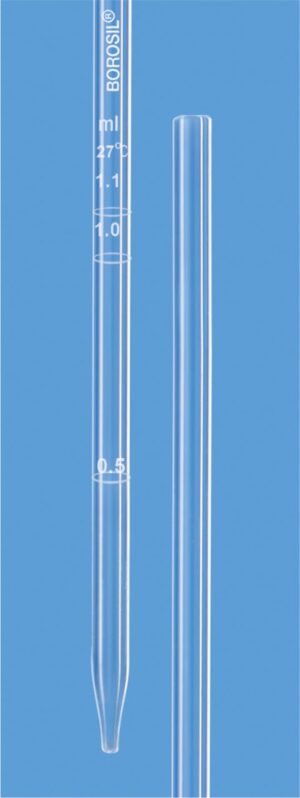
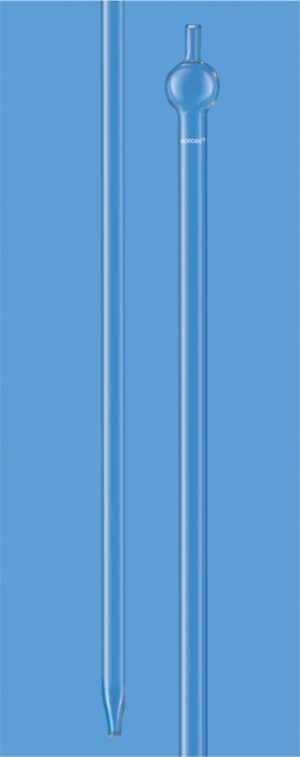
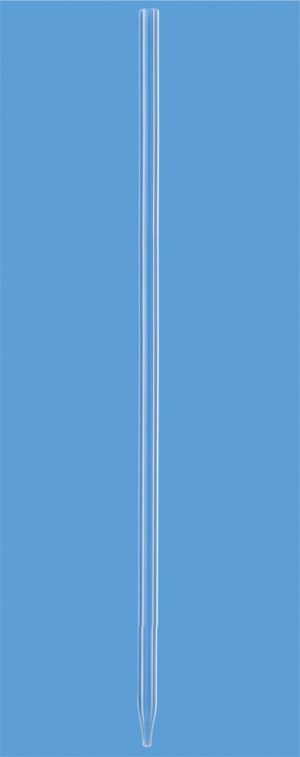
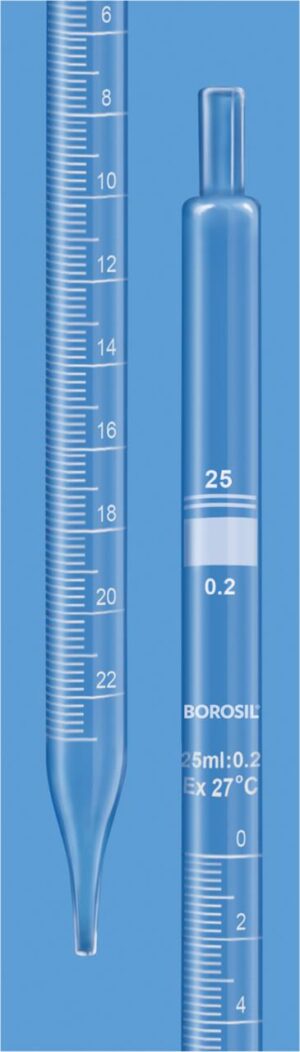
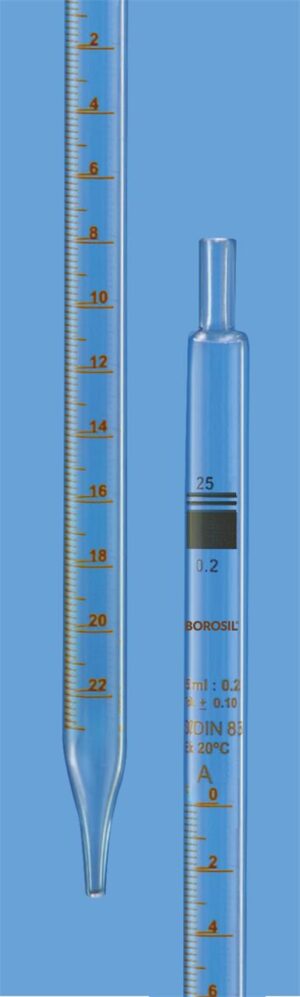
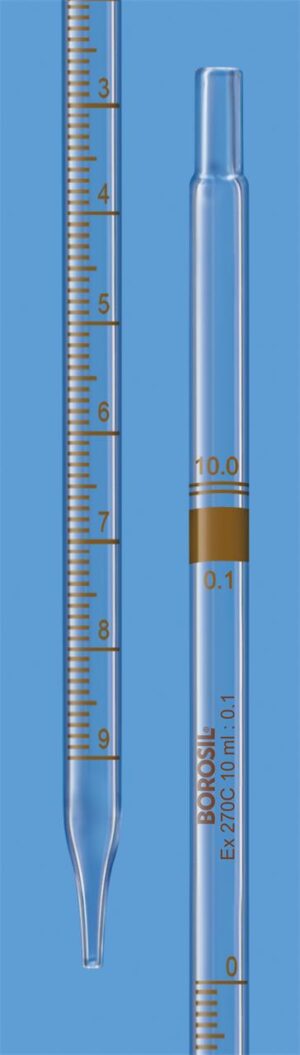
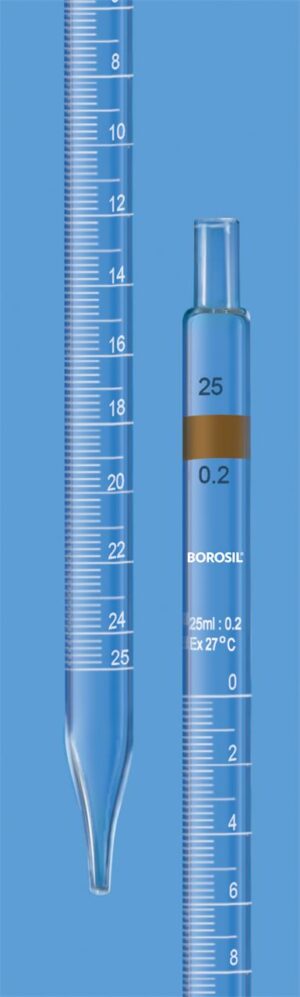
Types of Pipettes Offered by Borosil Scientific
The Borosil Scientific pipette range is based on precision, thermal durability, and solvent compatibility. Each version follows either ISO or ASTM volumetric standards, based on how it is meant to be used. Here are the main groups listed below:
| Category | Model Numbers | Accuracy Class | Key Features |
| Volumetric Pipettes | 7100, 7101, 7102, 7103, 7106 | Class A/B | Single-mark delivery, ISO/ASTM traceable calibration, amber option (7106) |
| Serological Pipettes | 7079, 7080, 7081, 7082 | Class A/B | Graduated to the tip, USP-compliant variants (7081) |
| Mohr Pipettes | 7059, 7060, 7062 | Class A/B | Partial-delivery type, enamel graduations |
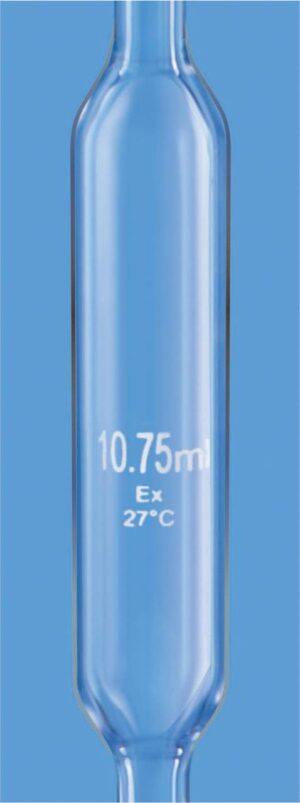
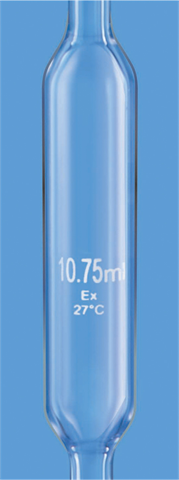
| Milk/Bacteriological Pipettes | 7056, 7057, 7058 | – | Designed for Gerber analysis and microbial assays; 7058 includes a certificate |
| Drum Sampling | 7041 | – | Long stem for barrel sampling, used in QA and industrial audits |
| Artificial Insemination | 7040 | – | Veterinary-use geometry for controlled insemination processes |
Glass Pipettes: Features & Benefits
Glass pipettes are very important in analytical and applied science settings because they can be used in a wide range of chemical conditions and always deliver the same results. All of the precision pipettes made by Borosil Scientific are made of borosilicate 3.3 glass because it doesn’t expand much when heated and can withstand many different types of chemicals. Key performance advantages include:
- Thermal resistance: The ability to keep the same shape and size during autoclaving and flame sterilisation. The expansion coefficient can handle being heated repeatedly.
- Chemical durability: Suitable for acids, alkalis, oxidisers, and organic solvents without etching or loss of clarity.
- Calibration integrity: Because of its consistent bore geometry, calibration accuracy is maintained over long periods of use with Class A pipettes (for example, 7100, 7059, 7079).
- Light-sensitive options: Amber versions such as 7106 prevent photodegradation of sensitive analytes.
Volumetric vs Graduated (Serological/Mohr) Pipettes:
| Parameter | Volumetric Pipette (7100 series) | Graduated Pipette (Serological/Mohr) |
| Accuracy | Highest; single volume mark | Moderate; for variable volumes |
| Calibration | ISO/ASTM Class A available with certificates | Class A and B options |
| Use Case | Standards, reagents, assay controls | Titrations, dilutions, microbiology workflows |
| Cleaning | Straight cylindrical bore for easier cleaning | Multi-graduation requires careful handling |
Automatic Pipettes & Alternatives
Although Borosil Scientific does not manufacture automatic pipettes, it is important to understand how they compare to glass pipettes. Automatic variants work well in low-volume molecular workflows. However, for solvent handling, titrations, milk analysis, and calorimetric preparations, glass pipettes remain superior in terms of chemical compatibility and traceability.
Use-Case Comparison:
| Attribute | Glass Pipettes (Borosil Scientific) | Automatic Pipettes |
| Chemical Compatibility | Excellent; suitable for aggressive solvents | Limited; organic solvents may damage seals |
| Autoclavability | Complete sterilisation possible | Partial; depends on model |
| Traceability | Individual certification on Class A variants | Requires regular recalibration |
| Cost Efficiency | One-time investment; reusable | Consumables required; higher lifecycle cost |
| Volume Range | Broad (1 ml to 50 ml, depending on model) | Ideal for microlitre-scale work |
The wetting properties of glass pipettes make sure that no tips are retained, that no liquid evaporates, and that no discharge is incomplete. A lot of QA labs use both systems: automatic pipettes for microlitre precision and glass pipettes for millilitre-range volumetric delivery.
Why Choose Borosil Pipettes?
Vertical integration is used by Borosil Scientific to make sure that all steps of the manufacturing process, from raw glass tubing to calibration and quality checks, are done in controlled environments. The company’s method of calibration is gravimetric, which requires a high-precision balance and a temperature-controlled water bath. These conditions help ensure that each Class A pipette complies with the tolerance limits defined by ISO 648 and ASTM E969.
Key reasons for choosing Borosil Scientific pipettes include:
- High-precision markings: Permanently fused enamel graduations maintain readability.
- Lot traceability: Model numbers such as 7079, 7100, and 7059 carry batch identifiers for audit requirements.
- Wide application coverage: Dairy, pharmaceutical, chemical, environmental, and veterinary sectors.
- Quality documentation: Individual calibration certificates available with all Class A volumetric and serological pipettes.
Applications of Laboratory Pipettes
Pipettes play a central role in analytical, microbiological, and industrial workflows. Their applications vary depending on geometry, calibration class, and chemical environment. Typical applications include:
- Pharmaceutical QC: Preparation of volumetric standards using 7100 or 7101 pipettes.
- Clinical Chemistry: Use of 7056–7058 pipettes in fat and bacteriological testing.
- Environmental Monitoring: Sampling from sealed drums using model 7041 for pollutant assays.
- Biology & Microbiology: Serological pipettes (7079–7082) for cell culture media transfers.
- Veterinary Procedures: Controlled delivery in insemination workflows using model 7040.
A laboratory pipette is used in analytical, diagnostic, or quality control processes to measure and move precise amounts of liquid. Depending on the application, volumetric, serological, Mohr, or milk pipettes may be selected for accurate aliquoting, especially in controlled environments such as pharmaceutical labs or chemical research facilities.
Volumetric pipettes deliver a single, fixed volume with high precision (Class A or B), and are usually used for standard solutions and critical assays. Graduated pipettes, like Mohr and serological ones, have different volume markings that allow for flexible semi-quantitative work.
Yes. All pipette glass products from Borosil Scientific are manufactured from low-expansion, chemically resistant borosilicate glass. They are fully autoclavable at 121 °C for 15–20 minutes without affecting dimensional stability or calibration accuracy. Make sure that the caps or accessories are removed (where applicable) before autoclaving.
Volume ranges vary by the type of pipette being used. Borosil Scientific pipettes cover sizes from 0.1 mL to 50 mL, depending on the product series:
- Volumetric Pipettes (Class A/B): 0.5 mL to 50 mL
- Serological Pipettes: 1 mL to 25 mL
- Milk and Bacteriological Pipettes: 10.75 mL (Gerber standard)
Licensed scientific distributors, companies that sell lab equipment, and e-procurement websites all offer Borosil Scientific pipettes for online purchase. You can also get direct links to buy and contact information from the official Borosil Scientific website.