













Fat Analysis
-
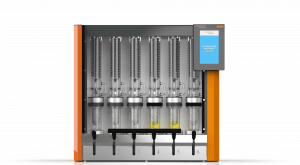
Fat Analyser – Randall Method
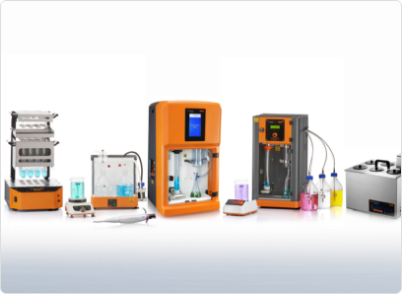
Randall Automated technology for Reliable & Repeatable Results A perfect solution for food, feed and industrial applications with our advanced...View Details -
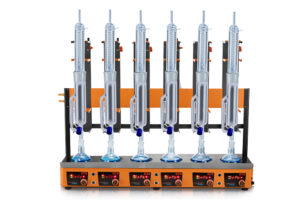
Soxhlet Apparatus
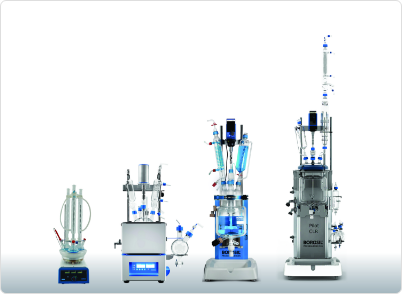
Soxhlet Apparatus for Fat Estimation.Delivering classical solutions with modernized approach for fat extractionView Details
Methods of Fat Analysis
Fat content determination methods are commonly classified into solvent extraction techniques and instrument-based screening methods. The choice of method depends on the sample matrix, the level of accuracy required, and laboratory throughput needs.
Solvent Extraction Methods
Solvent extraction is a widely accepted reference method for fat determination. It separates lipids from the sample matrix using suitable organic solvents, with Borosil Scientific supporting this approach through Soxhlet Apparatus and Randall Method Fat Analysers.
- Soxhlet Method
A classical continuous extraction technique in which the sample is repeatedly washed with an organic solvent, allowing thorough lipid extraction over multiple cycles. - Randall Method
An accelerated extraction technique that improves upon the Soxhlet process by immersing the sample directly in boiling solvent, followed by rinsing and solvent recovery, enabling faster fat determination.
Instrument-Based Methods (Industry Techniques)
Instrument-based methods are used in the food industry for rapid screening and process monitoring, but typically require calibration against solvent extraction methods.
- Near-Infrared Spectroscopy (NIR)
A non-destructive technique that estimates fat content by correlating spectral data with reference values. - Nuclear Magnetic Resonance (NMR)
A technique that measures the response of hydrogen nuclei in lipids to a magnetic field to estimate fat content.
Importance of Fat Analysis in the Food Industry
Quantifying lipid content is essential across multiple stages of food production. Accurate fat analysis supports formulation control, processing consistency, shelf-life assessment, and compliance with regulatory standards.
Nutritional Labelling and Compliance
Food regulations require a clear declaration of total fat and related lipid fractions on product labels. Reliable fat analysis ensures manufacturers meet statutory requirements and provide consumers with accurate nutritional information.
Product Quality and Consistency
Fat plays a key role in determining texture, flavour, and mouthfeel. Routine monitoring of fat levels helps maintain batch-to-batch consistency.
Economic Value
Precise fat analysis supports fair pricing, quality grading, and transparent trade practices.
Common Techniques for Fat Content Determination
Laboratories use dedicated extraction techniques to determine total fat content accurately. Borosil Scientific supports two established solvent-based approaches for fat analysis: classical Soxhlet extraction and the Randall Method, each suited to different laboratory throughput requirements.
The Soxhlet Extraction
Soxhlet extraction is a classical gravimetric method for fat determination. A dried and prepared sample is placed in a porous thimble within the extraction unit. The solvent is heated, vapourises, condenses, and repeatedly washes the sample. Dissolved lipids are collected with the solvent in the receiving flask for gravimetric measurement.
Table 1: Soxhlet Apparatus Specifications
| Component | Function | Material |
| Extractor | Holds the sample thimble; facilitates siphoning | Borosilicate Glass |
| Flask | Contains the solvent; collects extracted fat | Borosilicate Glass |
| Condenser | Condenses solvent vapour back to liquid form | Borosilicate Glass |
Note: Borosil Scientific Soxhlet extraction systems are designed for classical fat estimation, delivering consistent results through controlled solvent cycling.
The Randall Method
The Randall Method is an accelerated solvent extraction technique that enhances the classical Soxhlet process. It divides extraction into three sequential stages, allowing faster and more efficient lipid isolation.
Table: Randall Method Process Overview
| Step | Description | Purpose |
| Boiling | Sample is immersed directly in boiling solvent | Rapid lipid dissolution |
| Rinsing | Solvent washes the sample repeatedly | Complete extraction of residual fat |
| Recovery | Solvent is collected and condensed | Fat separation and solvent reuse |
Borosil Scientific offers Fat Analysers based on the Randall Method, providing a structured and repeatable approach for laboratories requiring faster fat determination compared to conventional Soxhlet extraction.
Applications of Fat Analysis in Quality Control
Quality control laboratories use fat analysis to monitor both raw materials and finished products, ensuring consistency and compliance throughout the production process.
- Raw Material Inspection
Verification of fat content in materials such as food & feed inputs before processing to confirm conformity with defined specifications. - Process Monitoring
Assessment of fat levels at key production stages, such as mixing, frying, or formulation, to support process control and maintain consistent product characteristics. - Adulteration Detection
Identification of potential adulteration in high-value oils or dairy products through deviations in expected total fat content, supported by standardised extraction-based analysis.
Standardised fat analysis protocols help maintain regulatory compliance, product uniformity, and reliable quality assessment through accurate and repeatable quantification.
Fat content is determined using solvent extraction techniques such as the Soxhlet method or the Randall Method, where lipids are extracted with an organic solvent and measured gravimetrically.
The Soxhlet method is a classical solvent extraction technique in which a sample is repeatedly washed with a boiling and condensing solvent to extract total fat for measurement.
Fat analysis helps ensure products meet nutritional specifications, maintain consistent quality, and comply with regulatory labelling requirements.
Results are expressed as a percentage by weight (g/100 g), indicating the total fat content extracted from the sample.
Costs vary by method. Classical Soxhlet extraction involves lower equipment costs but longer processing times, while accelerated methods like the Randall Method support higher throughput.