









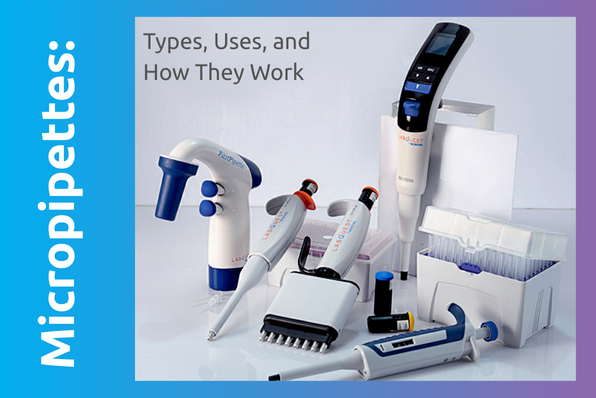
Micropipettes are precision instruments engineered to measure and transfer small volumes of liquid. In high-performance laboratory settings, including pharmaceutical research and development, clinical diagnostics, and quality control, these instruments form a fundamental element of the workflow. The operational range of micropipettes extends from 0.1 µl to 10,000 µl, providing versatility for various applications. All volume-specific accuracy is governed by ISO 8655 standards.
Borosil Scientific has three varieties of mechanical variable volume micropipettes within the LabQuest series: the C1, C2, and C3, each tailored for distinct applications and user ergonomics. These units are designed for compatibility with universal tips and are entirely autoclavable, ensuring reliability and sterility across various applications.
| Type | Volume Control | Features | Typical Use |
| Fixed Volume | Pre-set only | Minimal error margin, limited flexibility | Routine high-volume assays |
| Variable Volume | Adjustable within a range | Versatile, ergonomic | Multi-step procedures and R&D labs |
| Multichannel | 8 or 12 tips simultaneously | Time-efficient, consistent | ELISA, high-throughput screening |
| Electronic | Motorised operation | Automated, programmable | Repetitive pipetting |
We at Borosil Scientific also manufacture LabQuest Electronic Micropipettes. These are available in single, 8-channel, and 12-channel models, designed for repetitive pipetting with programmable features and precise electronic control..
C1 models are engineered for heavy-use laboratories that require a robust mechanical design without compromising volumetric accuracy. Applications include pharma QC labs, biotech formulation work, and academic labs handling routine tasks.
C2 is best used in diagnostic labs and molecular biology workflows, where user fatigue from extended pipetting sessions is a factor.
Designed for routine laboratory use, our C3 micropipettes offer an affordable solution with reliable corrosion resistance and dimensional stability, making them suitable for solvent-heavy workflows.
| Application Segment | Specific Use Case |
| Pharmaceutical QC | Dosage standardisation, analytical dilutions |
| Clinical Diagnostics | Sample prep for PCR, ELISA, and automated analysers |
| Research Labs | Gene sequencing, cloning,and serial dilution |
| Academic Institutions | Chemistry practicals, biotechnology demonstrations |
| Environmental Labs | Water quality analysis, pollutant testing |
Mechanical micropipettes are preferred as they have high thermal stability, minimal expansion, and autoclaving compatibility. Borosil Scientific units meet these needs without compromise.
For maximum equipment longevity, follow the calibration logbook standards provided by your quality department.
Incorrect pipetting practices contribute to high volumes of experimental deviation and sample loss. To maintain accuracy, all laboratory personnel should be trained on operational best practices specific to mechanical micropipettes. Pre-wetting tips before aspirating volatile solutions can minimise evaporation-related errors. Holding the micropipette vertically while aspirating prevents uneven pressure distribution inside the air column, ensuring consistent draw.
Each plunger should be depressed and released with uniform speed. Rapid release may introduce air bubbles, while inconsistent plunging can compromise volumetric integrity. Operators should also avoid overdrawing beyond the pipette’s rated range, as it causes permanent calibration drift.
Borosil Scientific’s LabQuest pipettes are equipped with design features such as smooth plunger action and rigid volume locking, which can reduce these risks. Institutions should make sure that routine pipetting workshops and post-calibration functional testing are conducted to maintain compliance.
Standard air displacement micropipettes are not ideal for liquids with high viscosity or volatility. Nevertheless, with specific adjustments in methodology and appropriate equipment design, accuracy can be maintained. Reverse pipetting is advised for viscous reagents such as glycerol and DMSO. This includes aspirating an excess volume and dispensing exactly the required amount, leaving the residual liquid in the tip.
For volatile substances that evaporate rapidly and generate air gaps, it is important to make use of tips with minimal retention and swift transfer capabilities. The PVDF tip cone in Borosil Scientific’s C3 model, for example, guarantees exceptional chemical compatibility and reduced absorption, making it best suited for these applications. Proper storage of reagents and consistent plunger speed also support accuracy. In such applications, repeated calibration checks are advised.
Micropipettes are indispensable in precision liquid handling. The reliability of measurement directly affects experimental outcomes while dealing with sensitive biological materials or high-value reagents. Borosil Scientific’s LabQuest C1, C2, and C3 micropipettes are engineered to fulfil the varied requirements of Indian laboratories. Featuring autoclavability, ISO-certified precision, and ergonomic design, they integrate performance with durability.
Borosil Scientific is dedicated to delivering calibrated, compliant, and durable micropipetting solutions for professionals in pharmaceuticals, academia, and diagnostics. For technical enquiries or specifications, please take a look at our e-Catalogue or reach out to our laboratory equipment experts.