









Parallel synthesis refers to the simultaneous execution of multiple chemical reactions in an organised and controlled manner, typically using uniform parameters but varying compounds or conditions. It allows chemists to compare reaction outcomes across different variables efficiently, accelerating method development, optimisation, and screening processes.
Unlike traditional sequential methods, where each reaction is conducted one after another, parallel synthesis offers both time-saving and resource-efficiency benefits, particularly in combinatorial chemistry, pharmaceutical research, and process development.
The primary advantage of parallel synthesis lies in its ability to facilitate multiple reactions under identical or slightly varied conditions. This leads to reliable data comparison and faster screening.
For reproducibility, temperature control and sample uniformity are critical. Glassware compatibility and stability must also be assured, which is where Borosil Scientific’s systems demonstrate dependable material performance.
Parallel synthesis is not confined to one industry. It plays a key role across multiple sectors:
| Industry | Application Example |
| Pharmaceuticals | Drug screening, reaction optimisation, API synthesis |
| Fine Chemicals | Catalyst screening, synthesis of compound libraries |
| Agrochemicals | Pesticide and herbicide efficacy studies |
| Academia | Reaction pathway evaluation, teaching multi-variable chemistry |
Borosil Scientific’s range of jointed reaction flasks and modular reaction vessels provides a robust framework for such activities.
In practical deployment, parallel synthesis setups demand consistent performance, chemical resistance, and thermal durability. Borosil Scientific offers several glassware types suitable for these operations:
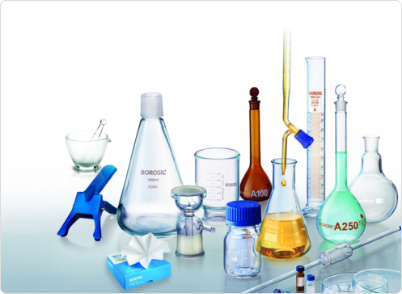
Made from 3.3 low-expansion borosilicate glass (ASTM E438 Type I, Class A), these flasks offer thermal stability and high chemical resistance. Available in volumes ranging from 50 mL to 5000 mL, they are fitted with standard taper joints to ensure seamless integration with laboratory components such as condensers, dosing funnels, or thermometric probes. The geometry supports uniform heat distribution, essential in parallel heating applications or controlled synthesis environments.
Designed for more complex reaction setups, multineck flasks allow simultaneous reagent addition, sampling, or sensor placement without interrupting the reaction process. The heavy-wall construction supports vacuum conditions and makes it suitable for prolonged reflux or variable-temperature studies. They are especially useful in parallel experiments where multiple parameters are varied simultaneously within the same run.
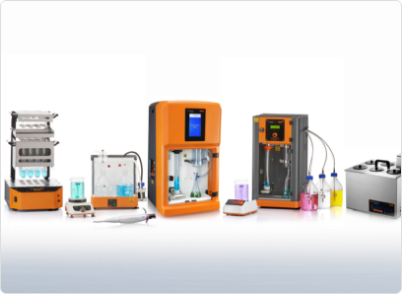
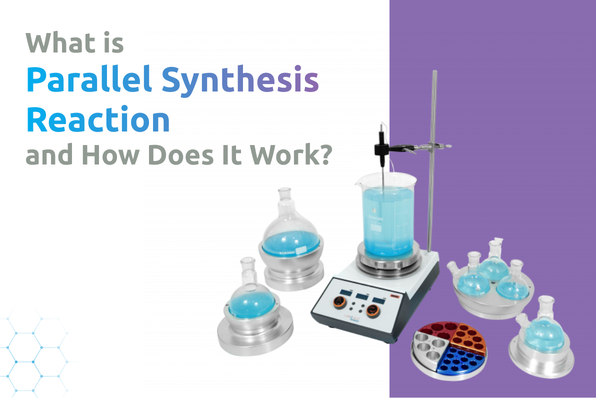
Offer seamless heating and stirring for round-bottom flasks from 10 mL to 5 L across multi-position platforms. Engineered for efficiency, they integrate with standard hotplate stirrers or overhead stirring systems. The blocks are available in chemical-resistant finishes, including ceramic, fluoropolymer, anodised aluminium, and PTFE-coated surfaces, each designed for easy cleaning and high resistance to aggressive solvents.
A quick-block interchange tool with a safe-release handle ensures protection from burns and facilitates rapid swapping of heated modules. Customisable interface options include TFT or 7-segment displays, and dual control knobs allow real-time adjustment of temperature and stirring parameters. These blocks are ideal for high-throughput synthesis, parallel reaction screening, or condition optimization experiments.
| Product Type | Material / Construction | Capacity / Format | Key Functional Features | Suitable Applications |
| Reaction Flasks | 3.3 Borosilicate Glass (ASTM E438 Type I, Class A) | 50 mL – 5000 mL | Uniform heat distribution, jointed necks, thermal resilience | Controlled synthesis, reflux, and distillation |
| Multineck Flasks | Heavy-wall Borosilicate Glass | Multiple neck variants | Allows sampling, vacuum application, or simultaneous reagent addition | Complex setups, reflux under varied conditions |
| Parallel Reaction Blocks | Aluminium or Coated Options (PTFE, Ceramic, etc.) | 10 mL to 5 L (multi-position setup) | Seamless heating/stirring, interchangeable blocks, TFT/7-segment displays, dual-knob adjustment, safety handle | High-throughput screening, combinatorial chemistry |
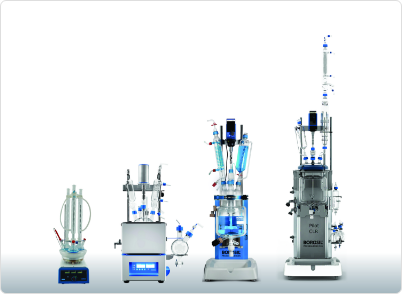
Once a successful reaction condition is identified, scale-up becomes necessary. Borosil Scientific supports this transition through:
| Lab Scale | Pilot Scale (COMET Series) |
| Flask Volume: 100 mL – 1 L | Vessel Capacity: 10 L – 20 L |
| Manual setup with reflux options | Automated monitoring and versatile accessory integration |
| PTFE-lined stoppers, glass joints | Modular design with dosing and distillation capability |
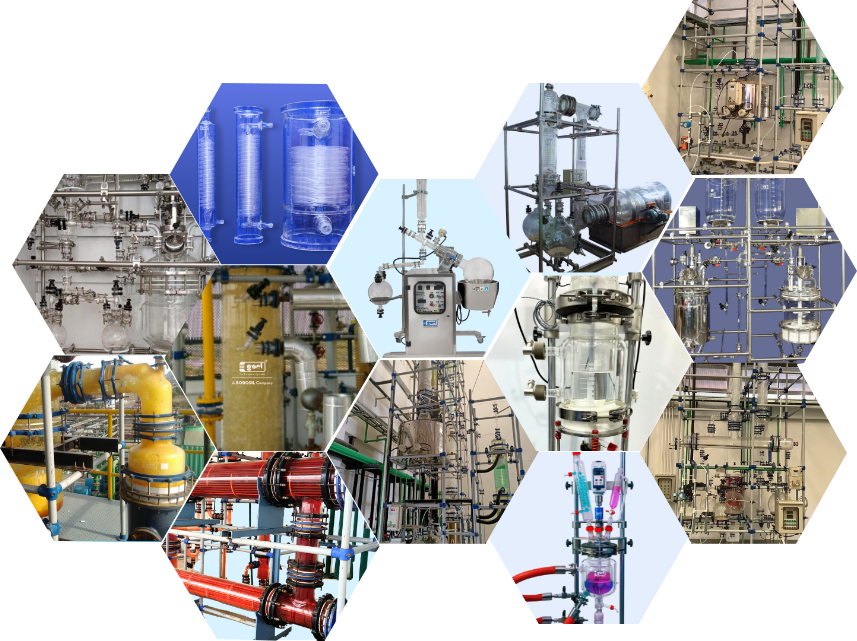
The COMET Pilot Reactor provides continuity in synthesis, from exploratory trials to industrial feasibility.
Choosing the correct vessel impacts reaction reproducibility. Below is a brief comparison:
| Vessel Type | Key Advantage | Application |
| Round Bottom Flask | Uniform heating, easy swirling | Standard reactions |
| Multineck Flask | Multiple access points for simultaneous additions | Variable parameter screening |
| Screw Cap Tubes | Quick sampling, solvent resistance | Small-scale parallel tests |
| Reaction Vials | Suitable for up to 96-well array experiments | Combinatorial library screening |
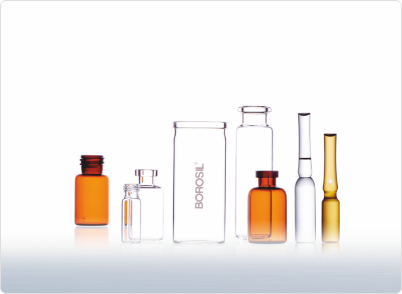
Note: Borosil Scientific manufactures ISO 15378-certified vials and flasks. COA per lot is available, with 100% dimensional inspection.
Efficient post-run maintenance supports reproducibility in parallel synthesis. Borosil Scientific recommends:
All Borosil Scientific vials and flasks are packaged in ISO Class 8 cleanrooms to avoid particulate contamination.
For high-throughput synthesis:
These integrations reduce manual workload and improve traceability.
While working with multiple simultaneous reactions:
Borosil Scientific’s multineck flasks and reaction blocks are designed with wide neck openings for easy inspection and sensor integration.
Evolving laboratory needs now include:
Borosil Scientific continues to innovate in this space, developing purpose-built labware for chemical R&D and formulation labs.
In a scientific environment where time, accuracy, and reproducibility are very important, parallel synthesis is a practical tool for accelerating discovery and improving process reliability. Whether you’re in pharmaceuticals, materials science, or education, the right tools will shape your outcomes.
Borosil Scientific supports this journey through robust, compliant, and precision-engineered glassware, ranging from round bottom and multineck flasks to pilot-scale reactor systems. With certified quality, modular options, and integration-ready formats, our products help laboratories build smarter workflows.