







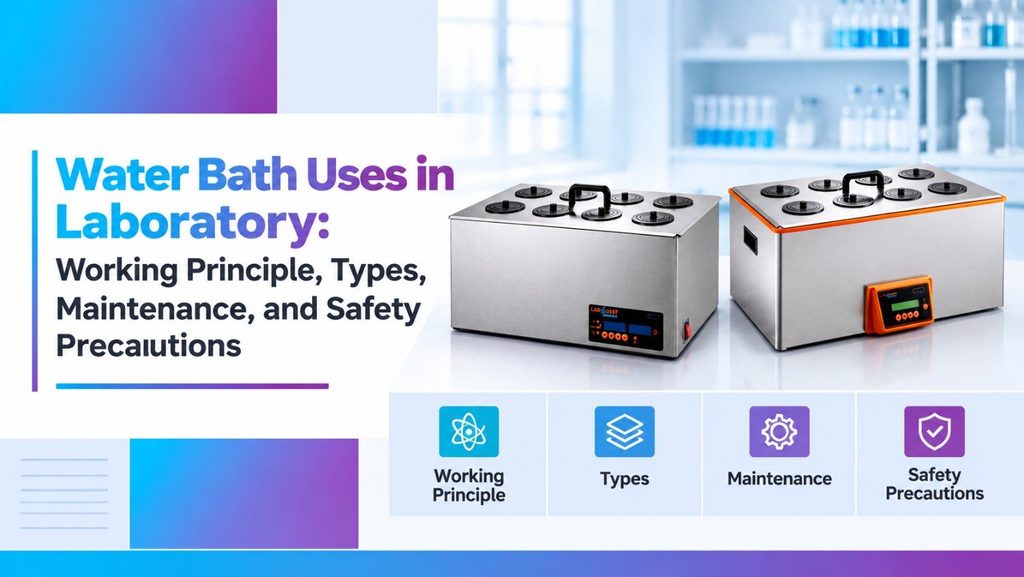
Water baths are a ubiquitous laboratory fixture, utilised for heating samples in a uniform, controlled environment. As opposed to direct heating techniques such as hot plates or open flames, water baths provide precise temperature control without degrading the sample, making them a necessity for pharmaceutical, chemical, and life sciences research.
No matter whether you’re running enzyme reactions, bacterial culture incubation, molecular biology assays, or chemical extractions, selecting the correct water bath is crucial. In the following guide, we’ll cover:
A water bath consists of a stainless-steel reservoir filled with water, heated by an internal heating element. The temperature is maintained and controlled using thermostats, PID controllers, or digital displays, and heating cooling circulators extend the same control to sub-ambient work.
| Component | Function |
| Heating Element | Heats water to the desired temperature. |
| Temperature Controller | Ensures stability and prevents overheating. |
| Circulator (if present) | Improves uniformity by evenly distributing heat. |
| Lid | Minimises evaporation and contamination. |
| Drain Tap | Simplifies water replacement and cleaning. |
For high-precision applications, Borosil Scientific’s Premium Circulating Water Baths feature built-in PTFE stir bars for active circulation, ensuring ±0.2°C accuracy at 37°C, essential for biological and pharmaceutical applications.
Different experiments require specific water bath configurations. Here’s how the major types compare.
Proper maintenance starts with filling the bath from a water distillation unit, which keeps mineral buildup and corrosion out of the reservoir. Here are some of the important things you should do to increase the lifespan of the devices.
For Borosil Scientific’s Premium Water Baths, the integrated drain tap simplifies water replacement, reducing contamination risks.
Water baths are safe when used correctly, but improper handling can lead to thermal burns, electrical hazards, or contamination.
| Safety Concern | Preventive Action |
| Overheating | Set correct temperatures; use overheat protection features. |
| Electrical Hazard | Keep power cords dry and avoid spills near electrical components. |
| Evaporation | Always use a lid to retain water levels and prevent contamination. |
| Spillage | Maintain proper water levels; do not overfill. |
| Sample Cross-Contamination | Clean regularly and avoid mixing incompatible samples. |
We at Borosil Scientific, add to this further. Our water baths come equipped with:
Selecting the right water bath depends on factors like temperature precision, sample type, and circulation requirements.
Borosil Scientific’s range includes models with USB data logging, PTFE stir bars, and overheat protection, ensuring compliance with pharmaceutical and research lab standards. Before purchasing, consider bath size, power consumption, and material durability to ensure seamless integration into your lab workflow.
One crucial factor is selecting a water bath that accommodates both your lab space and sample volume. Smaller units fit neatly on cramped benches but may not offer sufficient capacity for larger flasks or glass beakers. If you typically heat multiple samples simultaneously like test tube racks, you may need a larger bath. Ensure there’s enough room to submerge your containers fully.
Overcrowding a small bath can lead to uneven temperatures, interfering with reproducible results. If you’re working with especially tall vessels, measure the bath’s depth carefully. This avoids sample exposure above the waterline, where temperature consistency can wane.
Laboratories focused on microbiology, cell culture, or sensitive assays must take extra steps to reduce contamination risks. Regularly disinfect the lid and interior surfaces with gentle, lab-grade cleansers or alcohol-based solutions. Replace water frequently, especially if working with biological samples, to prevent microbial growth. When possible, use sealed sample containers to prevent splashes or spills that can contaminate the bath.
A separate water bath dedicated solely to sterile tasks (like warming media) can further protect your work. Keeping a serological water bath lidded also helps maintain sterility. By following these procedures, you ensure both accuracy and cleanliness, crucial in highly regulated labs.
Whether you need a circulating water bath for enzyme assays, a serological model for microbiology, or an ultrasonic bath for labware cleaning, Borosil Scientific’s range ensures precision, safety, and durability.
Investing in the right water bath is essential for reproducible results, and with Borosil Scientific, you get technology that meets the highest standards.
Ready to optimise your laboratory workflow? Browse our water baths today.